
Last updated November 25, 2026
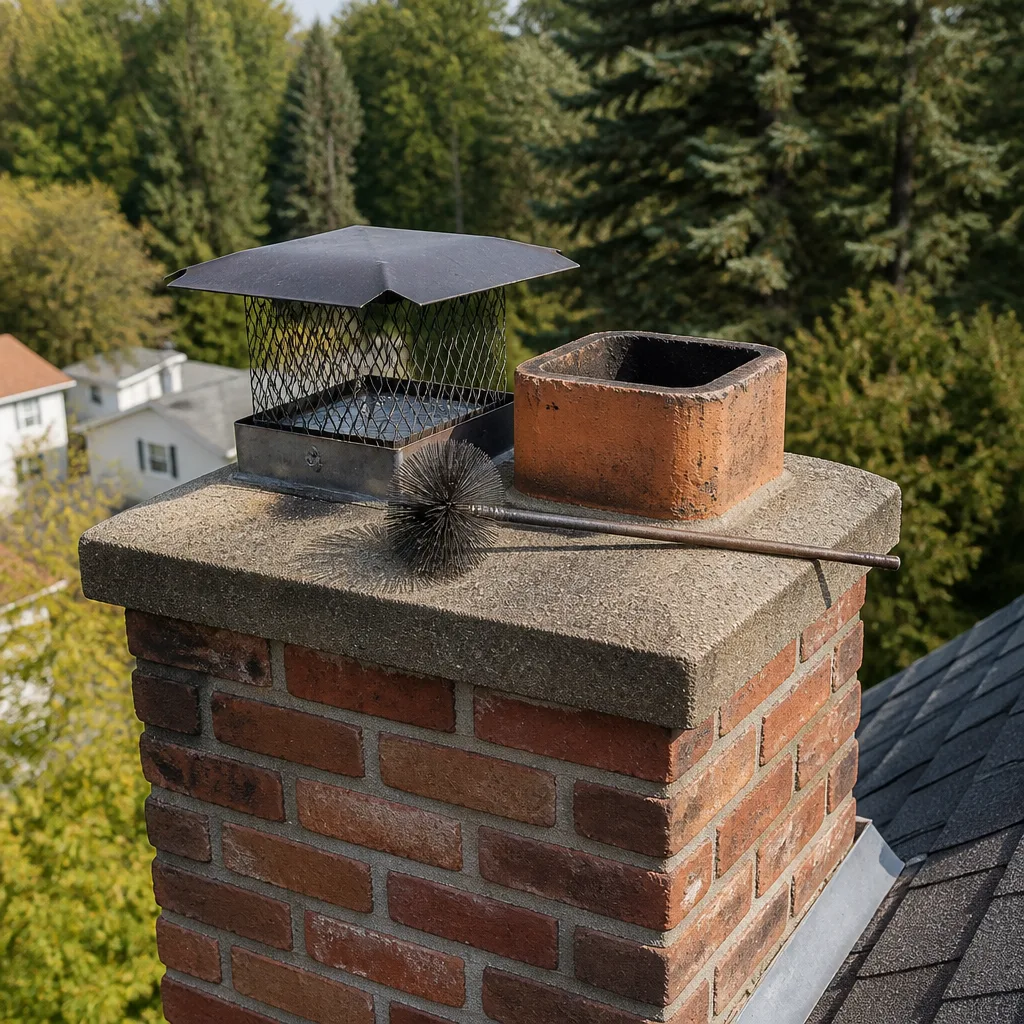 Sweep & inspection
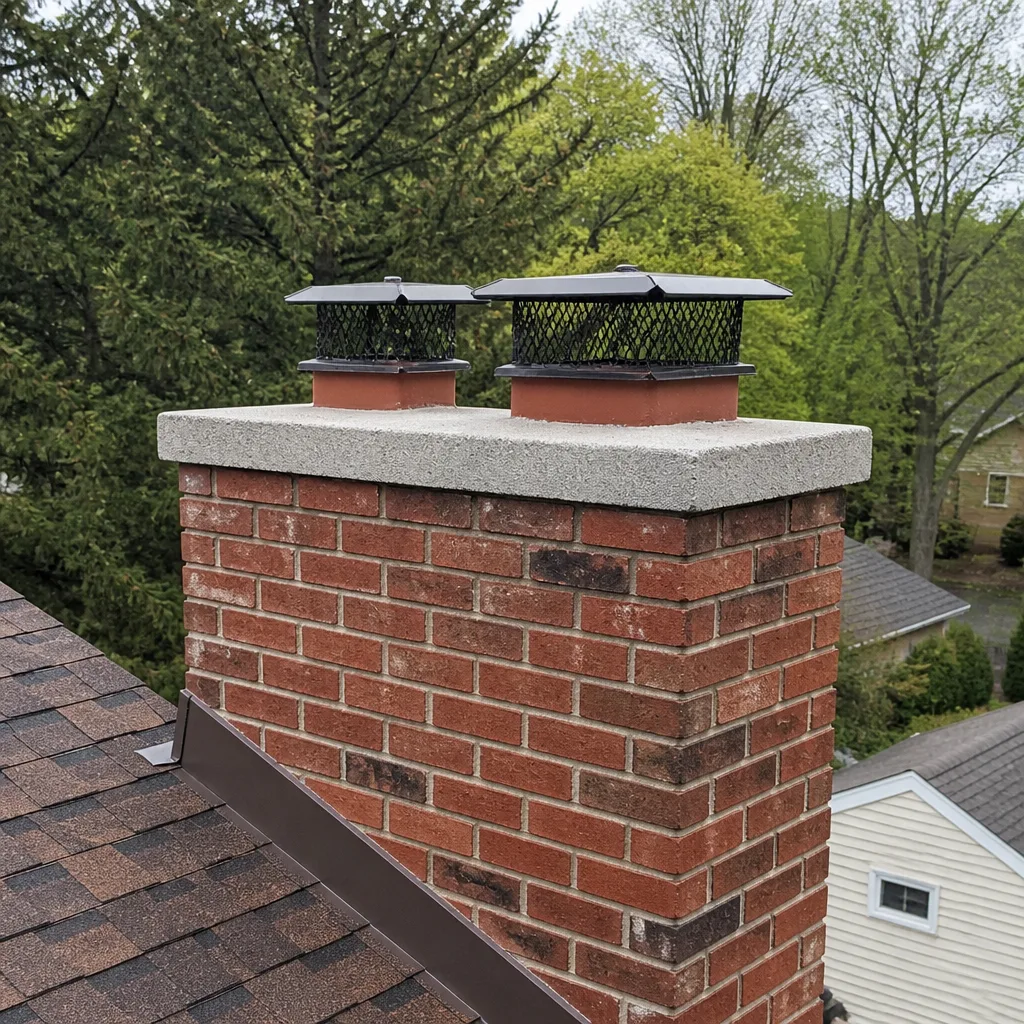 Caps & crowns
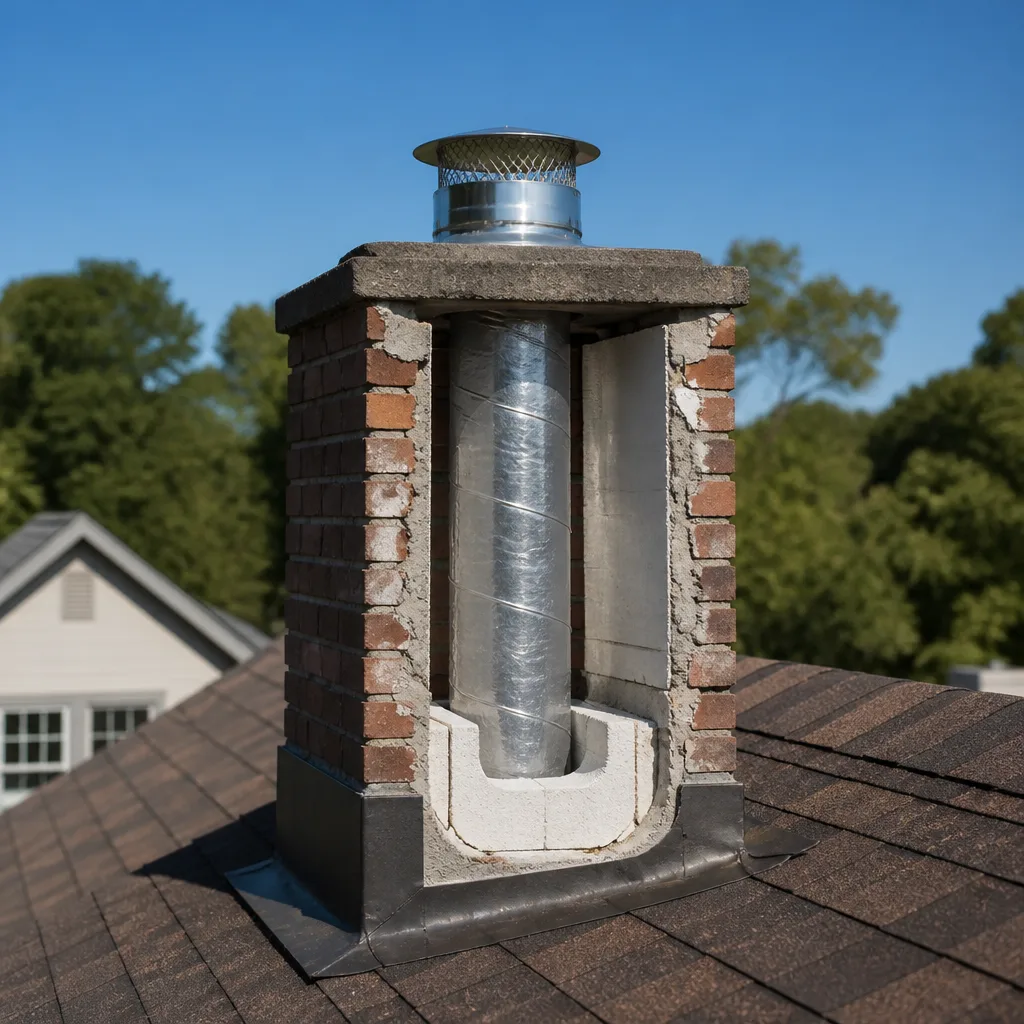 Flue relining
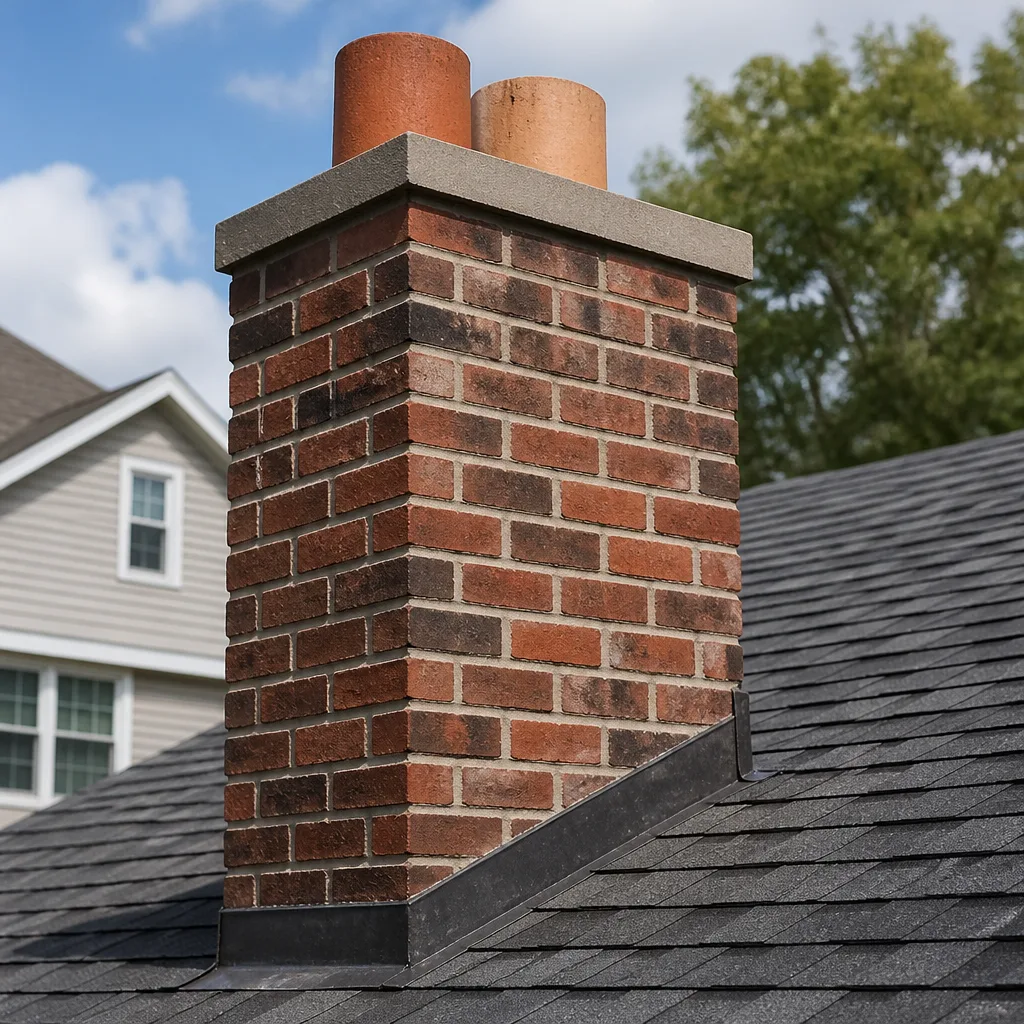 Masonry repair
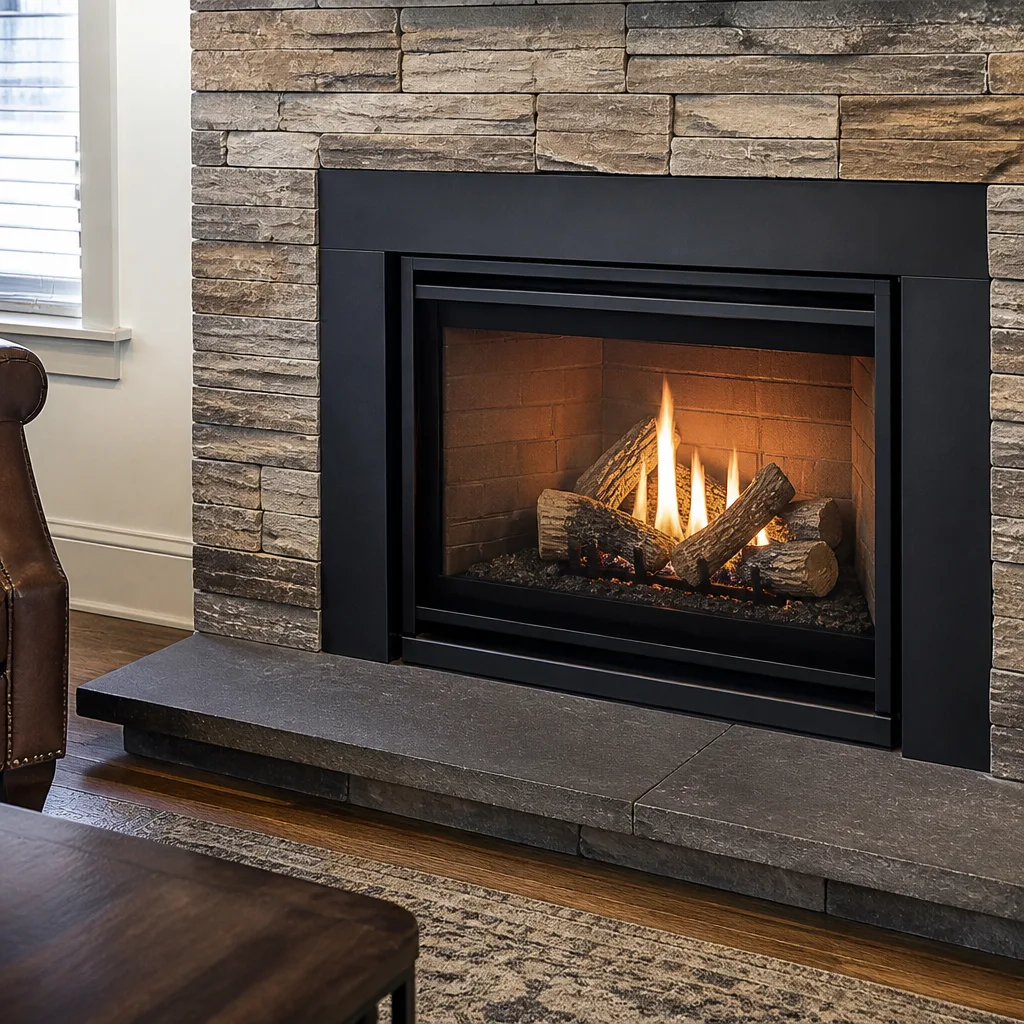 Gas fireplace service
Level 1 sweep and inspection to the NFPA 211 annual standard - flue, crown, cap, and flashing checked and photographed
Chimney sweep logs do not sweep chimneys. They loosen some creosote - which then falls where a brush and vacuum still have to collect it.
Chimney Sweep Maintenance Checklist for French Park Homeowners
The damper is the most-neglected part of a residential chimney, and most homeowners haven’t physically touched theirs in years. That means plenty of French Park homeowners have no idea whether their damper is stuck open, sealed shut by corrosion, or missing its gasket entirely. A chimney that sits unused isn’t a chimney at rest; in our mild climate it’s a chimney quietly collecting moisture, debris, and animal traffic. This guide gives you a tiered checklist: what you can safely check yourself, what needs a professional eye and camera, how often each part really needs attention, and what to record after each visit so the next technician starts with a baseline instead of a blank page.
Quick Answer
A chimney maintenance checklist in French Park should cover five components on different schedules: sweep the flue once a year if you burn wood, inspect the cap and crown every spring and fall, test the damper by hand each season, have the liner and firebox mortar evaluated by camera during your annual inspection, and log every finding after each visit. Homeowners can check the cap, the visible crown, and damper operation themselves. Liner condition, internal mortar joints, and flue obstructions need a professional camera and tools.
Styles & brands we work with
- Sweep & inspection
- Caps & crowns
- Flue relining
- Masonry repair
- Gas fireplace service
Table of Contents
- The Tiered Checklist: What You Can Check and What You Can’t
- How French Park’s Dry Heat and Smoke Season Age Your Chimney
- How Often Each Chimney Component Actually Needs Attention
- The Use-It-or-Lose-It Problem in a Mild Climate
- The Damper: Your First and Most Important Check
- Caps and Crowns: Where Water Gets In
- The Liner: What Only a Camera Can Show You
- What to Log After Every Sweep Visit
The Tiered Checklist: What You Can Check and What You Can’t
A chimney is a system, not a single object, and the parts don’t fail at the same rate or reveal themselves the same way. Splitting the checklist into three tiers keeps you from either ignoring the chimney entirely or climbing onto the roof when you shouldn’t.
Tier 1 – safe for any homeowner, from the ground or the firebox:
- Open and close the damper by hand. Does it move freely through its full range? Does it seal flush when closed? Can you see light past it when it’s shut?
- Look up the flue from the firebox with a flashlight. You’re checking for obvious blockages, heavy soot glaze, or a visible gap in the liner, not diagnosing liner condition.
- From the ground with binoculars, look at the cap and the crown. Is the cap straight and attached? Is the crown cracked, spalling, or pulling away from the flue tile?
- Check the firebox mortar joints for crumbling or missing mortar with your fingers, not a tool.
- Look for water stains, rust, or white efflorescence on the exterior masonry.
Tier 2 – needs a professional, but it’s not urgent: a full Level 2 inspection with a camera, evaluation of liner joints you can’t see from below, assessment of crown cracking that needs repair rather than monitoring, and confirmation that a cap is the right size and material for your flue.
Tier 3 – call right away: a damper that won’t open at all, visible cracked or missing flue tile, soot falling into the firebox, a strong creosote smell in the house when the fireplace isn’t in use, or any sign of a bird or animal nest in the flue. A blocked or damaged flue is a carbon monoxide and chimney fire concern, and it should be seen before you burn again.
We work exclusively on chimneys, and that focus matters here: the checklist is built around how the whole system interacts, not just the firebox. When you’re ready for the Tier 2 work, our Chimney Sweep French Park team handles the full assembly from the firebox floor to the cap.
How French Park’s Dry Heat and Smoke Season Age Your Chimney
French Park’s Mediterranean climate is easy on a house in most respects. It’s not easy on a chimney. Long, dry summers pull moisture out of masonry and mortar, and that drying causes the clay flue tiles and the mortar joints around them to shrink and crack over time. The crown, which is the concrete or mortar cap on top of the chimney, takes the most direct sun and the widest swings in temperature between day and night; that’s why crown cracking is one of the most common findings in French Park homes, and why the crack is usually on the sun-facing side.
Then comes smoke season. Wildfire smoke carries fine particulates and acidic compounds that settle on the flue walls and combine with creosote from your own fires. That layer is more corrosive than creosote alone. It attacks metal flue components and accelerates rust on damper assemblies and caps, particularly the older galvanized caps that are common on homes built before the 1990s. A cap that would have lasted another decade in a wetter, cooler climate can rust through faster here.
What this means for maintenance:
- Check the cap and crown every spring, before fire season, not just in the fall. Spring is when the damage from the previous summer is visible.
- Wipe down and inspect the damper assembly once a year for rust and stiffness, since dry heat plus smoke residue is exactly what seizes them.
- Have the flue swept before the first burn of the season, so the smoke-season deposits don’t sit all summer on a liner you can’t see.
- If you replace a cap, go with a durable professional-grade product rather than another thin galvanized one. We work with Gelco and Copperfield caps for exactly this reason.
How Often Each Chimney Component Actually Needs Attention
Most homeowners assume “once a year” applies to the whole chimney. It doesn’t. Each component has its own realistic interval, and treating them all the same is how things get missed on one end and over-serviced on the other. Here’s the honest range we work from in French Park.
- Flue sweep: once a year if you burn wood regularly, and for any fireplace that’s been used at all in the previous season. If you burn only occasionally, every one to two years is reasonable, but a sweep before the first burn of the season is the baseline.
- Damper: test it each season by hand; a professional inspection of the assembly every year or two.
- Cap: inspect every spring and fall; replace when the mesh is torn, the cap is loose, or the metal has rusted through. Most caps, well-chosen, last many years.
- Crown: inspect every spring; repair or seal when you see cracks wider than a hairline or spalling. A repaired crown can last many years; a neglected one lets water into the masonry and starts a much larger problem.
- Liner: inspected by camera once a year; a clay tile liner has a long service life but needs re-evaluation if there’s been a chimney fire or the crown has leaked. If the liner is failing, relining with a DuraFlex or HeatShield system is the standard route.
- Firebox mortar: inspected each year, repointed when joints are crumbling.
Keep in mind the annual inspection is what drives the schedule. The sweep is a cleaning, and the inspection is the diagnostic. On a gas fireplace, the frequency of sweeping drops but the inspection interval doesn’t. If you’re not sure which interval applies to your setup, the safest move is the annual inspection, and let that tell you what else needs doing.
The Use-It-or-Lose-It Problem in a Mild Climate
Here’s the counterintuitive thing about a fireplace in French Park: the ones used least are often in the worst shape. A fireplace used regularly gets swept, inspected, and looked at. A fireplace used a handful of times over the winter does not. It sits for months with a flue that hasn’t been swept, a damper that hasn’t moved, and a cap doing its job of keeping weather out. And meanwhile every summer, the dry heat and smoke season deposit their layer, undisturbed.
An unused chimney doesn’t stop aging. It ages in ways that are harder to see:
- The damper seizes from lack of movement and rust from smoke residue left behind after the last fire.
- Undisturbed creosote and smoke deposits on the flue walls stay put and, with any moisture, turn corrosive.
- Caps and crowns sit through every summer, sun-facing, without anyone noticing a crack.
- Birds and small animals see an open, unused flue as shelter, and blockages build up quietly.
Wood fires aren’t the only source of oxidation and residue in a chimney. A gas fireplace with a vented flue still needs its annual inspection, and a wood fireplace you rarely use still needs its sweep before you light the first fire of the year. Our advice to French Park homeowners who fall into this category: treat the fireplaces you don’t use as the ones most in need of a check, not the ones that can wait. That’s the whole point of the checklist, and it’s the reason we ask clients to note how many times their fireplace was actually used since their last visit.
The Damper: Your First and Most Important Check
The damper is a metal plate at the top of the firebox that controls the flow of air up the flue. It’s the easiest component to check, the one most homeowners never touch, and the one whose failure has the most direct bearing on how your fireplace behaves.
There are three states a neglected damper tends to be in, and each tells you something different:
- Corroded open. The plate moves stiffly or not at all, stuck in the open position. In winter, that’s a path for cold air and, in some setups, a way for smoke odor to drift into the house from an unused fireplace. Closing it matters for energy and comfort.
- Corroded shut or sealed. The plate won’t open. If you light a fire, the smoke has nowhere to go but into the room. This is a hard stop; do not burn until it’s freed or repaired.
- Missing its seal or gasket. The plate moves but doesn’t seat properly. You get drafts, smoke smell, and inefficient burning even with the damper in the “closed” position.
How to check, safely: never put your hand near the damper while there’s a fire, and let everything cool fully first. With the firebox cold, move the damper handle through its full range and look up at the plate with a flashlight. You’re checking for free movement and a flush seal, not trying to repair anything. If it’s stuck, rusty, or the seal is gone, that’s a professional repair. A seized damper that gets forced can break the frame it sits in, and the repair becomes bigger than it needed to be.
If your damper needs work, our fireplace repair service covers the assembly, and we’ll tell you exactly what we found before any work begins. For most French Park homes this is a modest repair rather than a rebuild, but it’s the one that lets you use the fireplace at all.
Caps and Crowns: Where Water Gets In
Most of the expensive chimney repairs we see trace back to one of these two components, and both are at the top of the chimney, out of sight from the ground unless you know what you’re looking for.
The crown is the concrete or mortar surface on top of the chimney that slopes gently away from the flue. Its whole job is to shed water. When it cracks, spalls, or pulls away from the flue tile, water gets into the masonry below. That water, over time, soaks the flue structure and can show up as rust on the damper, staining on the firebox, or disintegrating mortar inside the flue.
The cap is the structure fitted over the flue opening. It does two jobs: it keeps rain and animals out of the flue, and it keeps sparks in. A good cap, made of durable material and correctly sized, lasts many years. A failing one has torn mesh, a loose attachment, or rusted-through metal, and each of those is an opening for water, birds, or debris.
What to look for yourself, safely, from the ground with binoculars:
- Cracks in the crown, especially radiating from the flue, and any crumbling at the edge.
- Crown edges that look like they’ve separated from the chimney walls.
- A cap that sits crooked, has a sagging or torn screen, or is clearly rusted through.
- White staining or efflorescence on the chimney sides, which can suggest water has been running through or across the masonry.
What you can’t assess from there: how deep the crown cracks go, whether the flue tile top is cracked, and whether the cap is correctly sized and vented for your appliance. Our chimney cap & crown service handles the repair or replacement on both. We work with Gelco and Copperfield caps and use professional-grade repair materials for crowns, and nothing is recommended without evidence you can see. If a cap is missing or damaged and you haven’t had a technician assess the flue yet, that’s a reasonable place to start.
The Liner: What Only a Camera Can Show You
The liner is the lining inside the flue, the layer that carries smoke and heat safely out of the house and keeps the products of combustion away from the wood framing and household air. It’s the single component you cannot inspect properly from below.
What you can see from the firebox is a short stretch at the bottom. What you can’t see is the rest of the run, where the joints between clay tiles can crack or separate, where smoke deposits build up unevenly, and where creosote glazing forms. That’s where the professional camera comes in. During a Level 2 inspection, a technician runs a camera down the flue and photographs what it finds, and you should get to see those photos. That’s the standard we hold to: no recommendation without camera evidence you can review yourself.
Why the liner matters so much: a cracked flue tile or failed liner can allow heat and combustion byproducts into places they shouldn’t go. That’s a heat exposure concern and a carbon monoxide concern, and it’s one of the main reasons an annual inspection is worth doing even on a fireplace that gets occasional use.
When a liner is failing, relining is the usual route, and the systems we work with include DuraFlex, HeatShield, and Olympia Chimney. HeatShield can restore a damaged clay flue in some cases; a DuraFlex liner is the standard for a full relining. We’ll tell you which applies, why, and what the evidence shows, and we’re equally clear when a liner can safely wait rather than be replaced now.
A caution for anyone thinking about inspecting the inside of their own flue: creosote and smoke deposits are a fire hazard, and a chimney fire can start from a single spark in an improperly cleaned flue. Don’t brush, scrape, or attempt to repair a liner yourself. The liner is a trained professional’s job, from inspection through installation.
What to Log After Every Sweep Visit
A chimney’s history is only useful if someone writes it down. Most homeowners start from zero at every visit, because the last technician’s findings are gone. A simple log, kept with your maintenance records, changes that. It gives the next technician a baseline, and it lets you see small changes over time instead of discovering them as one big problem.
What to record after each visit, in a notebook or a document:
- The date of the visit and the name of the technician who did the work.
- What was swept: which flue, which appliance.
- What the camera inspection showed, in plain terms, plus which photos you received.
- The condition of each component: damper operation, cap condition, crown condition, liner condition, firebox mortar.
- Any recommendations, with the “watch” items separated from the “do now” and “safe to wait” items.
- How many fires you actually burned since the previous visit, and whether you burned wood or used a gas appliance.
- Any repairs made, what materials or brands were used, and what was replaced.
Acknowledging the reason for the log: the reader’s real worry is being told they need thousands of dollars of liner or masonry work with no way to verify it. The log, combined with camera evidence you can see, is how you avoid that. You’ll know what the flue looked like last year, what it looks like this year, and whether the change justifies the cost. When the evidence isn’t there, we say so, and we tell you what can safely wait. That’s what makes the record worth keeping.
Common Mistakes to Avoid
- Sweeping only when you think you need it. The annual sweep and inspection is the baseline your whole checklist hangs on. Skipping it because the fireplace “seems fine” is how a crown crack or a blocked flue goes unnoticed through a fire season.
- Not touching the damper from one year to the next. In French Park’s dry climate, rust and lack of movement are the two most common causes of a seized damper. Testing it each season takes a minute and is the cheapest maintenance you’ll do.
- Ignoring the cap because it’s out of sight. A damaged or missing cap lets water, debris, and animals into the flue. Check it with binoculars every spring and fall.
- Assuming a rarely used fireplace needs less attention. In our experience, low-use fireplaces are the ones most likely to have seized dampers, undisturbed creosote, and animal nests. They need the annual inspection just as much as heavily used ones.
- Trying to diagnose or repair the liner yourself. Cracks and joint separations only show up with a camera. Don’t brush or scrape the flue, and don’t trust an assessment without photos.
- Starting from zero every visit. Not keeping a log of what was found and when means the next technician has nothing to compare against, and small changes get missed until they’re large.
- Treating the crown as someone else’s problem. A small crown crack is a modest repair. The water damage it lets in, over time, turns it into a much larger one.
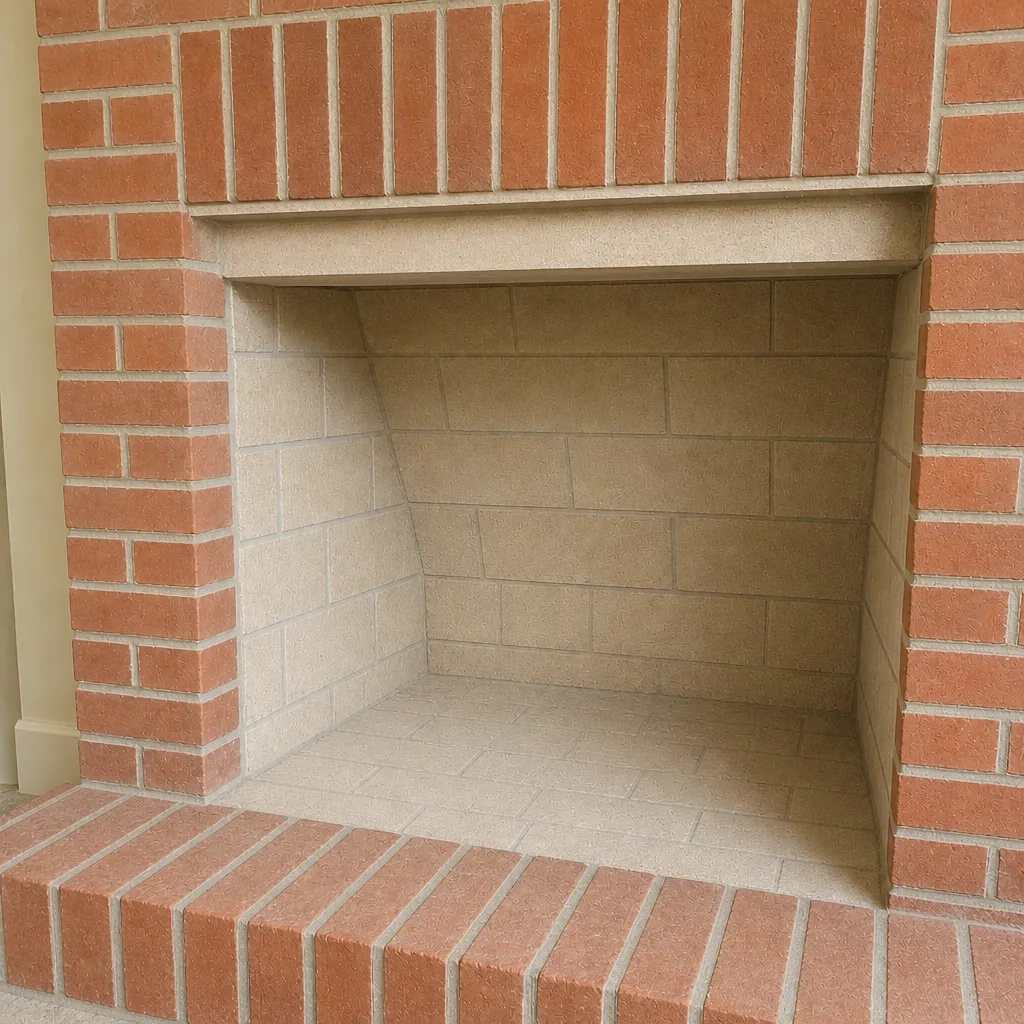
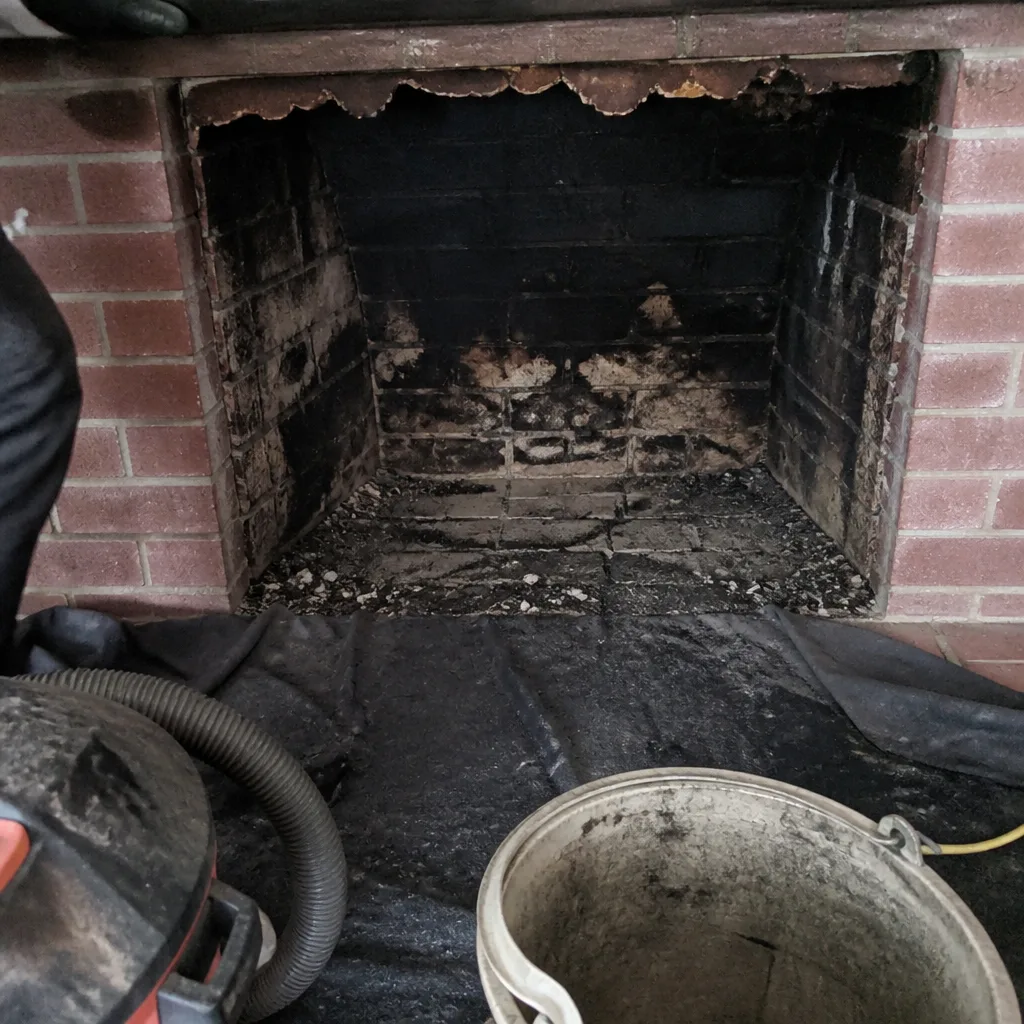
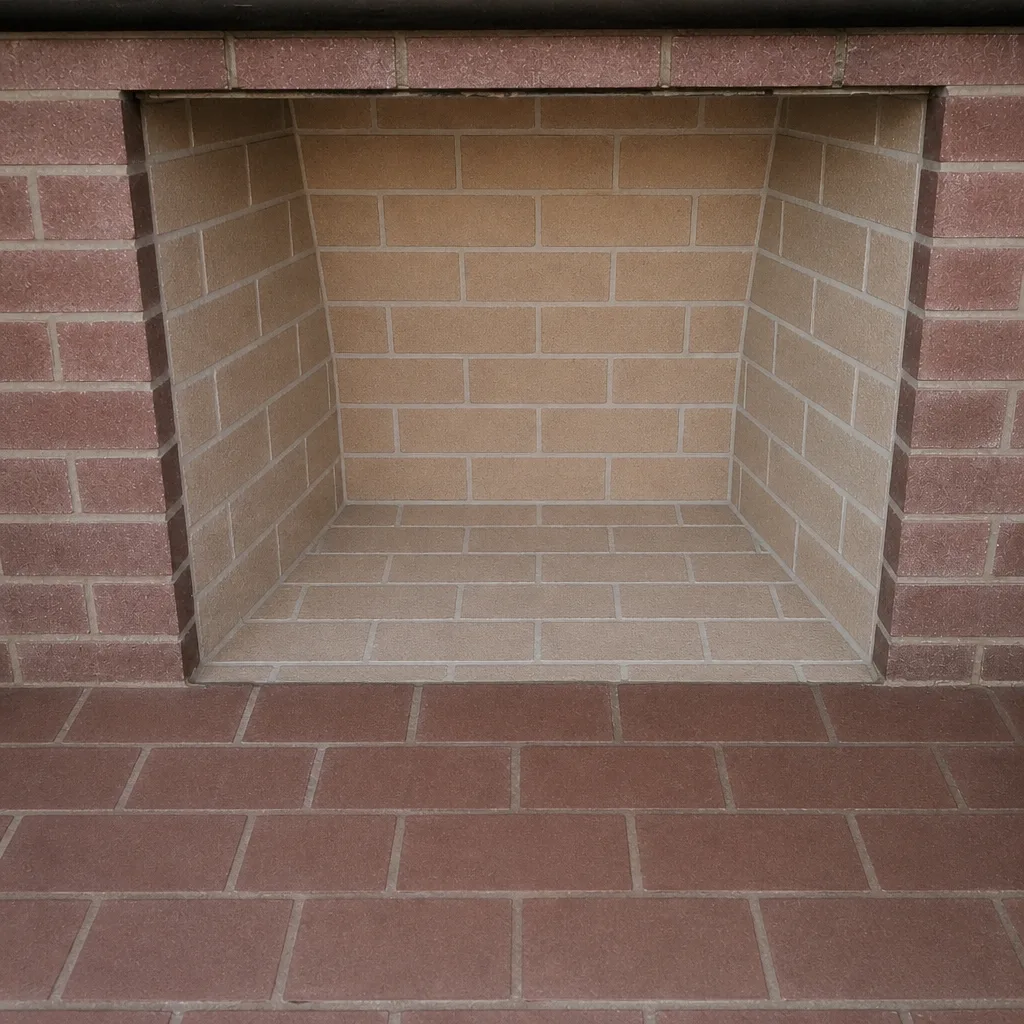
See the difference
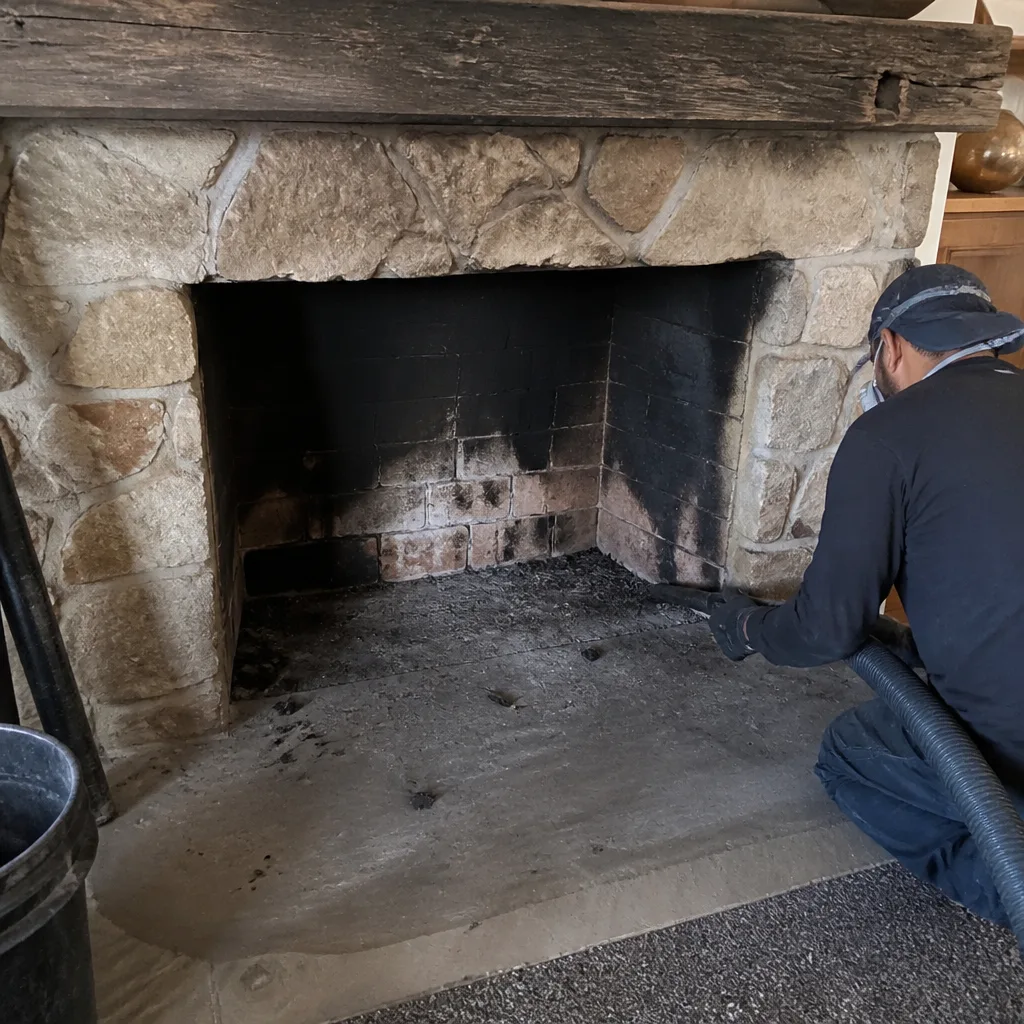 Before
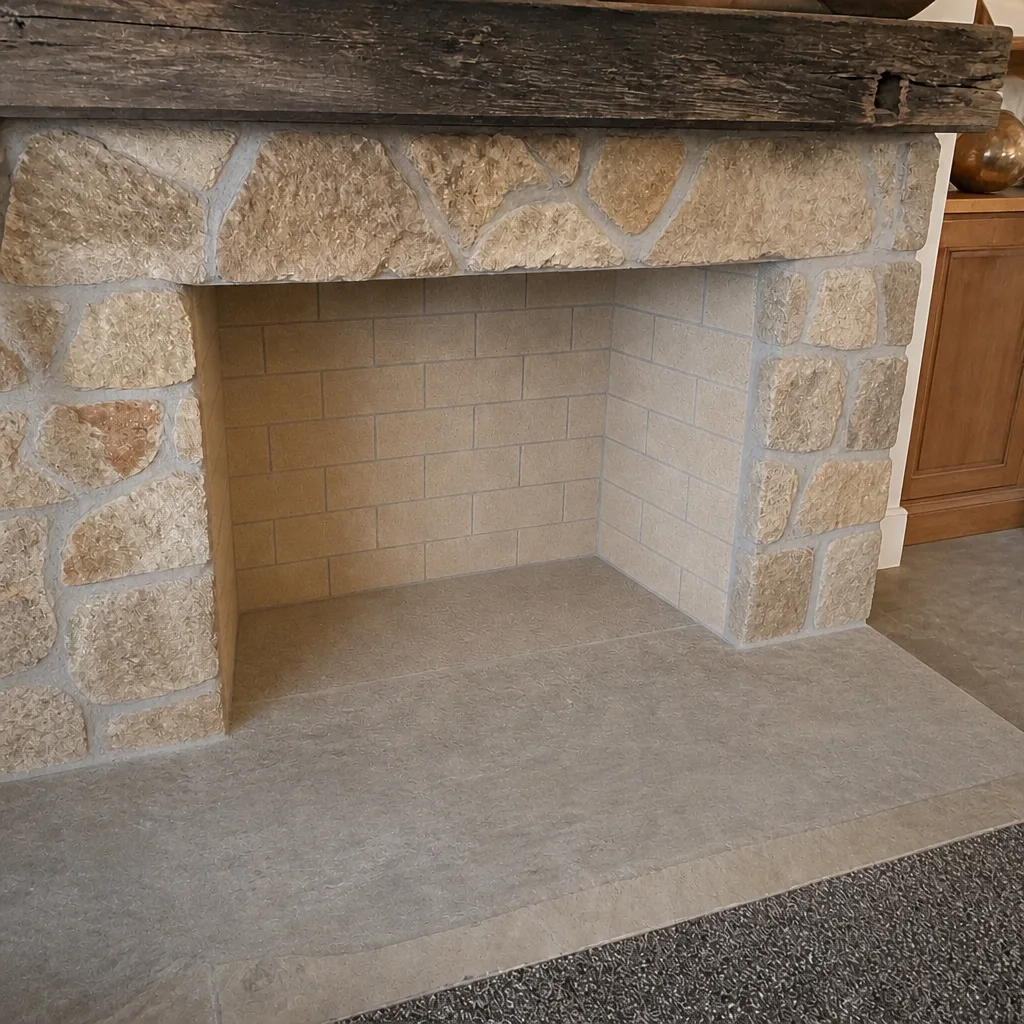 After
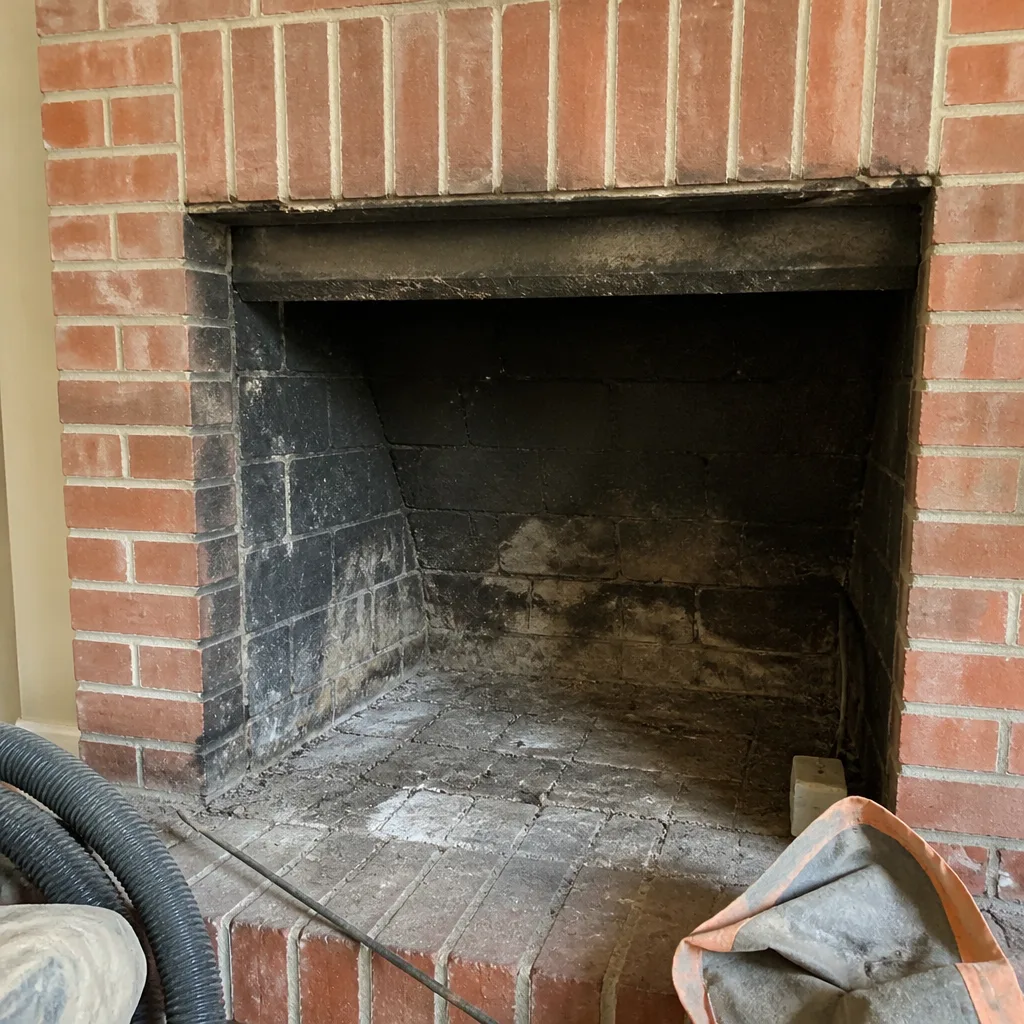 Before
 After
 Before
 After
When to Call a Professional
Some of the checklist you can do yourself. These situations need a trained technician, and don’t wait on them. A damper that won’t open at all or won’t seal; any sign of a cracked or missing flue tile, soot falling into the firebox, or a strong smoke smell in the house when the fireplace is cold; a crown with cracks you can see from the ground; a cap that’s loose, torn, or missing; or evidence of a bird or animal in the flue. And on schedule: the annual sweep and Level 2 inspection. If you’ve never had a camera inspection, that’s the next step, even on a fireplace you rarely use. Chimney Sweep French Park offers free estimates in French Park; call (833) 482-6444. Our technicians have up to 15 years of experience. We answer 24/7. Fast dispatch from 7am to 7pm, Sunday through Friday.
Frequently Asked Questions
The price depends on your flue, your appliance, and what the inspection finds, so a written estimate is the only figure that matters. The sweep is priced per job by the estimate, and the estimate is free. Call (833) 482-6444 for an exact quote.
Once a year if you burn wood regularly, and once a year if you use the fireplace at all, before the first burn of the season. If your use is genuinely occasional, every one to two years is reasonable, but the annual inspection still applies. An inspection is the diagnostic; the sweep is the cleaning. Call (833) 482-6444 with questions.
Only if the camera shows the liner is cracked, separated, or otherwise failing. A recommendation to reline should always come with photos you can review, and a HeatShield restoration or DuraFlex liner is the standard route when it’s needed. If the flue is sound, you’ll hear that clearly too. Call (833) 482-6444 for an inspection with a photo report.
A damper seizes from rust and from lack of movement, and the dry air and smoke residue in French Park speed both. If it’s stuck open, it’s a comfort and draft issue that’s worth repairing but not an emergency. If it’s stuck shut, do not light a fire; that’s a call-us-now situation. Call (833) 482-6444.
Yes, and it’s often the fireplace that needs it most. Low-use fireplaces sit with undisturbed creosote, a damper that hasn’t moved, and a cap and crown nobody has looked at, all through the dry season. Book the annual inspection regardless of how many times you burned. Call (833) 482-6444.
An inspection is a look at every component from the firebox to the cap: the damper, the firebox mortar, the visible flue, and the liner by camera, plus the cap and crown. You get the findings in plain terms with the photos, and we separate what needs doing now from what can safely wait. Call (833) 482-6444 for a free estimate.
The Bottom Line
A chimney maintenance checklist is really three schedules, not one. Sweep the flue once a year before the first burn, have the liner and firebox checked by camera during that same visit, and inspect the cap and crown every spring and fall. Test the damper by hand every season, because in French Park’s dry heat it’s the part most likely to seize. Log what each visit finds so the next technician starts with a baseline. The fireplaces you use least need the most attention. One call, one specialist for the whole assembly, and you’ll know what shape your chimney is in and what it needs.
Get Your Free Estimate
If you’re ready to put this checklist into practice, or you’ve never had a camera inspection of your flue, call (833) 482-6444. Chimney Sweep French Park handles sweeping, inspection, fireplace repair, chimney repair, and cap and crown work for French Park homeowners. We answer 24/7. Fast dispatch from 7am to 7pm, Sunday through Friday. Estimates are free, the price is set per job by the written estimate, and nothing is recommended without evidence you can see. Ask for our chimney sweep to start, and we’ll tell you exactly what we found and what it means before any work begins.
Written by the team at Chimney Sweep French Park.