
Last updated November 25, 2026
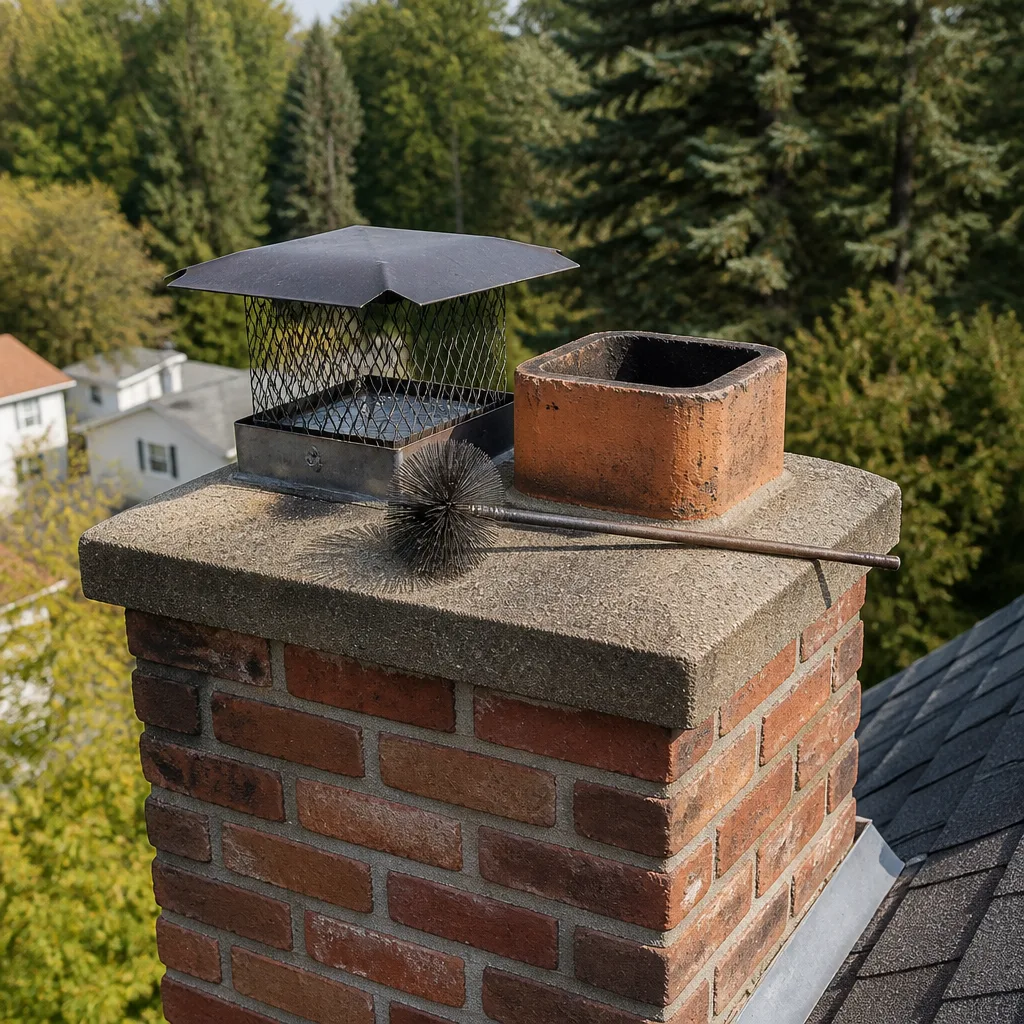 Sweep & inspection
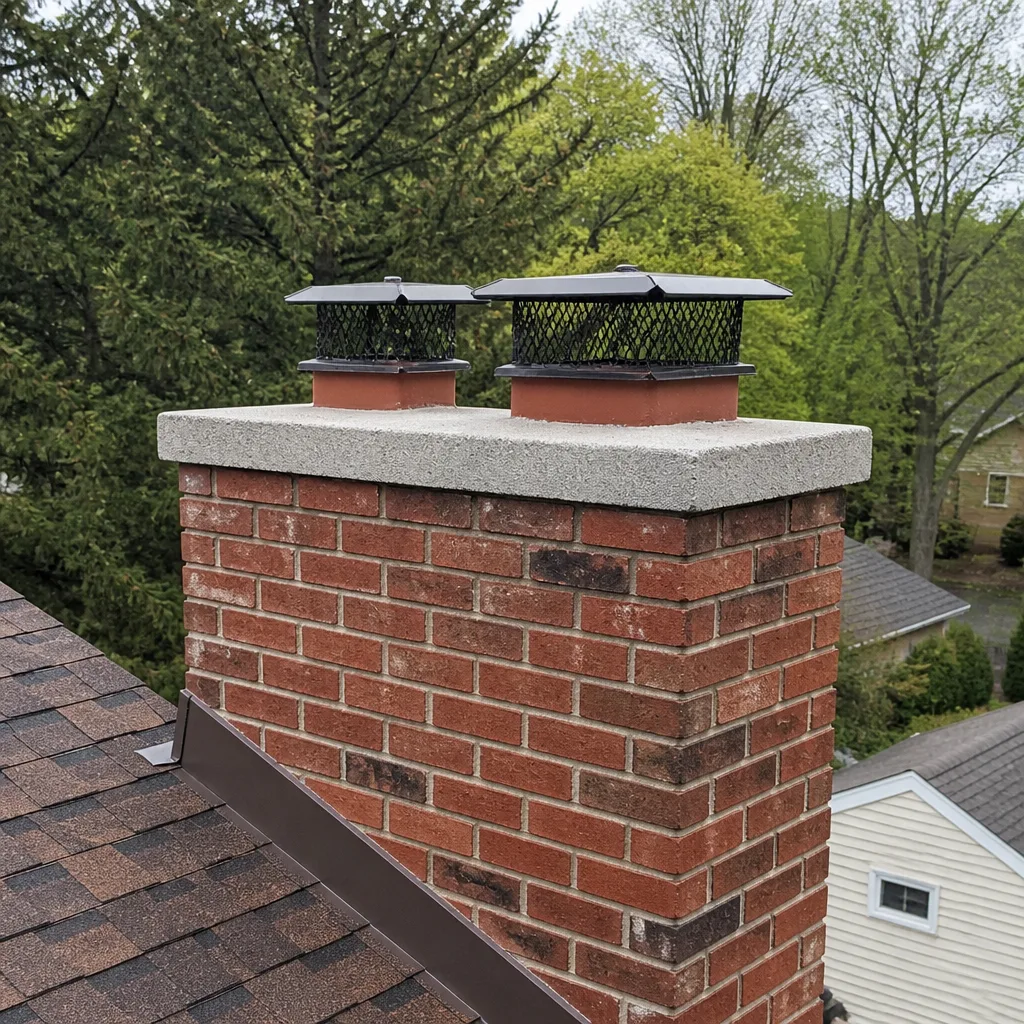 Caps & crowns
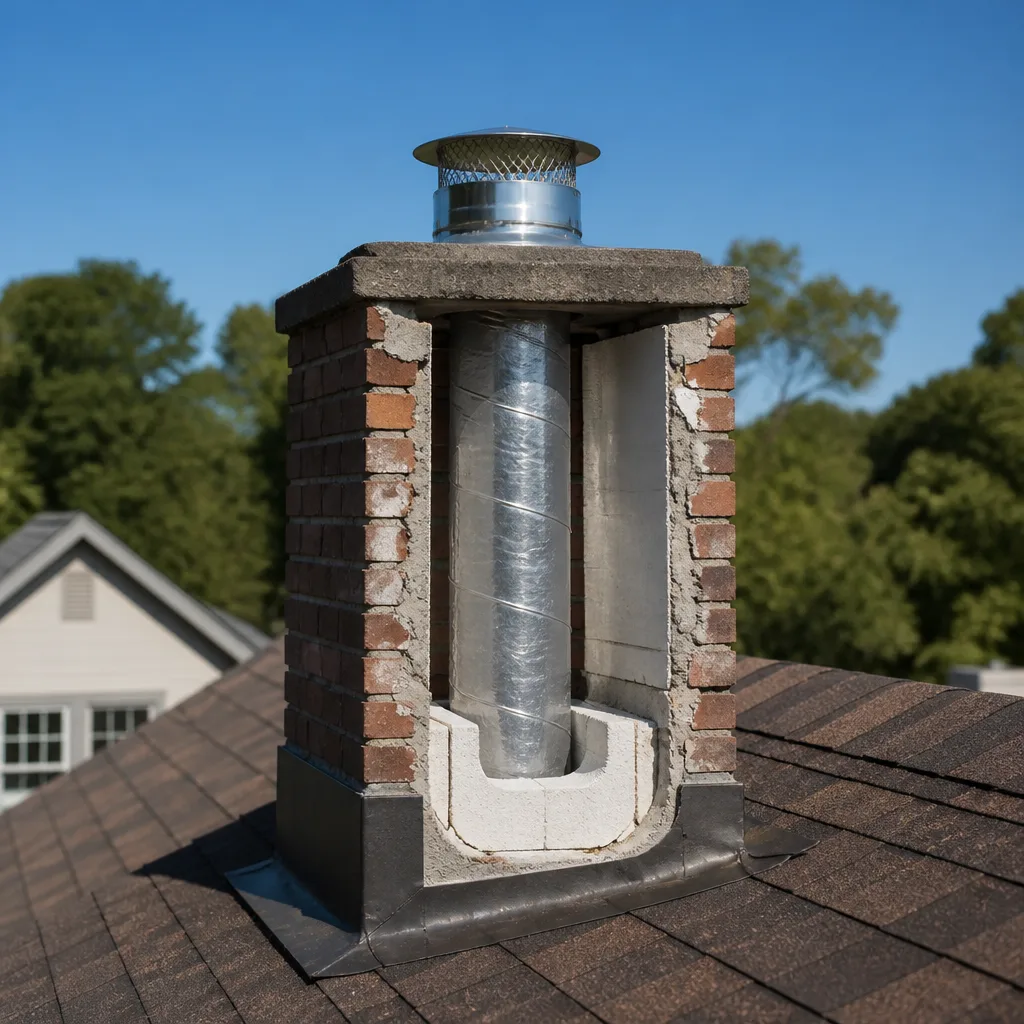 Flue relining
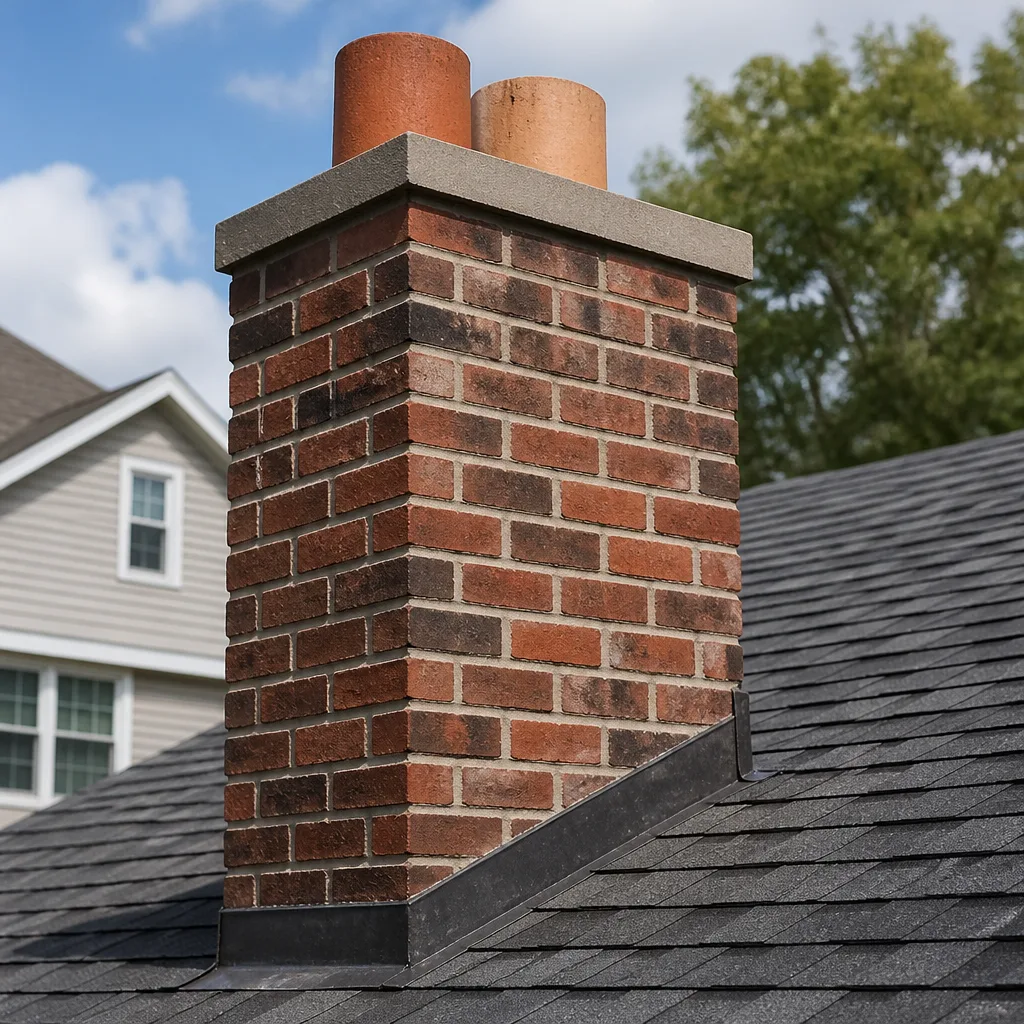 Masonry repair
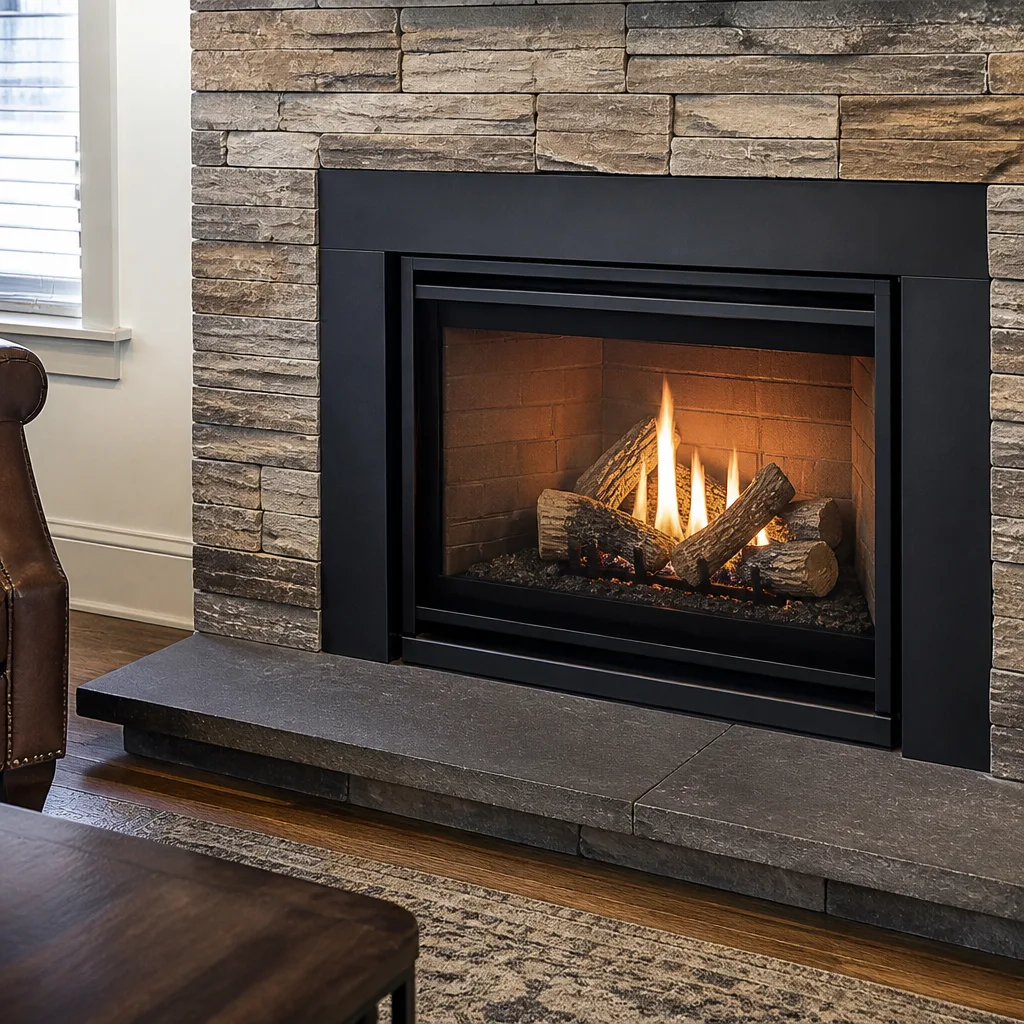 Gas fireplace service
Level 1 sweep and inspection to the NFPA 211 annual standard - flue, crown, cap, and flashing checked and photographed
Chimney sweep logs do not sweep chimneys. They loosen some creosote - which then falls where a brush and vacuum still have to collect it.
Chimney Cleaning Warning Signs: A French Park Homeowner’s Reference Guide
Most warning-sign lists are too late to be useful. They tell you to watch for smoke rolling into the room, heavy black staining on the exterior, or a fire that won’t draw at all. By the time those show up, the problem has usually been building for a season or more. The signals that matter are quieter: a faint white bloom on the brick, a damper handle that fights back, an odor that appears only when the weather turns. This guide covers those early indicators, how to tell a draft problem from a blockage from a liner failure, and what French Park’s wood-burning and prefab fireplaces tend to do as they age. You’ll finish knowing what to look at, what it means, and when it’s time to stop looking and call.
Quick Answer
The warning signs that justify a chimney cleaning in French Park are early and easy to miss: white efflorescence or chalky staining on exterior masonry, spalled brick edges, a damper that sticks or resists, creosote odor that appears when the weather changes, and unusual sounds during a fire. Any one of these warrants an inspection before the next burn. Two or more together mean stop using the fireplace until a professional has looked at it.
Styles & brands we work with
- Sweep & inspection
- Caps & crowns
- Flue relining
- Masonry repair
- Gas fireplace service
Table of Contents
- The White Stain That Isn’t Cosmetic: Efflorescence and What It Signals
- Spalling Brick and Crumbling Mortar: The Slow Structural Warning
- Damper Resistance and Odor Timing: What Your Fireplace Tells You Between Fires
- Draft Problem, Blockage, or Liner Failure? Reading the Firebox
- Warning Signs Specific to Prefab Metal Fireplaces
- What the Sounds During a Fire Actually Mean
- Wildfire Season: Temporary Warning Signs vs. Permanent Damage
- A No-Tools Walkthrough Checklist for French Park Homeowners
The White Stain That Isn’t Cosmetic: Efflorescence and What It Signals
A white, powdery bloom on exterior chimney brick isn’t a cleaning problem. It’s called efflorescence, and it’s the visible evidence of water moving through the masonry. Water carries dissolved salts from inside the brick and mortar to the surface, then evaporates and leaves the salts behind as a white crust. The stain is the trail; the water is the issue. If you’re seeing it on a chimney in French Park, water is finding a path into the structure, and that path usually runs from the crown, the flashing, or a failed cap downward through the brickwork and toward the flue.
Why this matters for chimney cleaning specifically: a chimney that stays damp accumulates creosote differently than a dry one. Moisture mixed with creosote produces a stickier, more acidic deposit that eats into mortar joints from the flue side. Left alone long enough, that’s a liner problem, not a cleaning problem. Efflorescence is your masonry telling you the sequence has already started.
What to look at first if you spot it:
- The crown. The concrete cap at the top of the chimney should shed water away from the flue. A cracked or crumbled crown lets water straight in.
- The cap. A missing or damaged spark arrestor cap leaves the flue open to rain and wildlife.
- The flashing. The metal where the chimney meets the roof is a common entry point, and it’s invisible from the ground.
- The stain pattern. Efflorescence concentrated at the top half of the chimney usually points to a crown or cap problem; staining near the roofline points toward flashing.
What efflorescence is not: it is not a sign that the chimney needs a sweep tomorrow. It’s a sign to get an inspection booked, and to have the exterior components checked at the same time. Our chimney cap & crown work exists for exactly this scenario – stopping water at the top before it works its way down. If the crown is sound and the stain still appears, we look harder at the flue and the liner. We’ll tell you what we found and what it means before any work begins.
One distinction worth knowing: some white bloom brushes away easily and comes back seasonally. That’s usually surface moisture. Efflorescence that returns with texture or pushes mortar out of the joints is a different stage, and it doesn’t resolve on its own.
Spalling Brick and Crumbling Mortar: The Slow Structural Warning
Spalling is when the face of a brick flakes, peels, or pops off, usually leaving a rough, crumbly edge behind. It’s the next stage after efflorescence in a wet chimney. Water gets in, freezes on the rare cold night this area does get in winter, expands, and pushes the brick face outward. Repeat that across a few seasons and the brick face is gone, the mortar joints are soft, and the masonry is holding less of itself up than it should.
You don’t need a ladder to spot early spalling. From the ground, look for:
- Brick faces with chipped or missing corners, especially near the top third of the chimney.
- Mortar joints that look recessed compared to surrounding joints – that’s mortar washing or wearing out.
- Grit or brick fragments on the roof or in the gutter below the chimney.
- A brick surface that looks “fuzzy” or has small pits, rather than a crisp face.
- Lighter-colored, newer-looking patches of masonry among the original brick – a sign of past repairs.
Spalling on a French Park chimney is usually a slow-motion problem. It happens over years, not weeks. That’s why it gets ignored. The reason a chimney sweep cares about it is that a chimney with failing mortar and a compromised crown lets water reach the flue liner from the outside, and a clay liner that cracks from thermal shock or moisture damage is no longer protecting the house from the fire.
This is where restoration work comes in. HeatShield is a resurfacing system for damaged flue liners that can restore a liner rather than replace it, and DuraFlex covers the full-relining side when replacement is the right call. Both are on our roster because a chimney specialist needs the repair options, not just the cleaning tools. If the exterior masonry itself is failing, we’ll tell you plainly what can wait a season and what can’t.
Famco and Gelco products show up in our cap, crown, and weatherproofing work for the same reason: the goal is to stop water reaching the flue in the first place, not to keep patching over the results.
Damper Resistance and Odor Timing: What Your Fireplace Tells You Between Fires
Your damper is a diagnostic tool, and most homeowners never use it that way. Open and close it a few times before you build the next fire. The way the handle feels tells you something.
- Stiff or grinding. The damper mechanism has carbon and creosote buildup in the track, or the plate is warped from heat.
- Won’t close flush. Something is lodged along the edge, or the damper frame has warped. A damper that won’t seal lets heated room air escape up the flue all winter.
- Won’t open fully. Creosote or a foreign object is blocking travel. A partially open damper costs you draft and increases smoke in the room.
- Loose or floppy. A worn linkage, ordinary with age. Not urgent, but worth noting during an inspection.
Odor timing is the other no-tools indicator. A chimney that smells like campfire or soot only in warm, humid weather, or only when it’s breezy, is telling you creosote is present in the flue and the pressure balance in the house has changed. That’s a normal draft reversal showing you a deposit that’s already there. The fix is a sweep. Call it a smell when the weather changes and you’re due.
A smell that appears with rain, or a smell that shows up inside the room even when the fire isn’t lit and the damper is closed, is a different signal. That points to water in the flue or a compromised seal between the fireplace and the room. Both need an inspection before the next burn.
Most French Park homes with a fireplace have a damper that hasn’t been exercised in months. Check it. If any of the four conditions above show up, book an inspection. If we find something, we show it to you.
Draft Problem, Blockage, or Liner Failure? Reading the Firebox
These three categories look similar from the sofa and are entirely different problems. Distinguishing them matters because the wrong diagnosis wastes money and the right one is often simpler than you fear. Here’s how to tell them apart using only what you can observe at the firebox.
Draft problem – operational issue
Signs: smoke spills into the room for the first five or ten minutes, then settles. The fire burns well after it gets going. Problems are worse on mild, still days and better on cold days. Opening a window near the fireplace fixes it temporarily. This is usually a pressure or flue-height issue, not a deposit problem. It can also be the damper, a closed flue on a prefab system, or an over-tight house.
Blockage – physical obstruction
Signs: consistent smoke spill regardless of the fire. A visible dark, glossy creosote layer at the top of the firebox. Debris in the firebox after a windy day. Animals, bird nests, or leaves – the National Fire Protection Association notes that creosote and debris blockages are a leading cause of chimney fires. A blockage doesn’t resolve with a window open. It resolves with a sweep, and the fire stays cold until then.
Liner failure – structural issue
Signs: a cracked or missing tile visible up the flue (use a flashlight from the firebox; don’t climb). Pieces of clay tile in the firebox after a burn. The smell of smoke in rooms far from the fireplace. A flue that smokes in a house that never smoked before, with no change in damper or firewood. This is the category that doesn’t fix itself with a cleaning. A failed liner puts heat and combustion gases directly against the framing and masonry – it’s the reason an inspection matters even when the chimney draws fine.
A sweep is the correct first step for a blockage, and a sweep is often the correct first step for a liner question too, because you can’t inspect a flue you can’t see. Our chimney sweep French Park work starts with a full look at the flue before anything gets cleaned.
Warning Signs Specific to Prefab Metal Fireplaces
Prefab fireplaces – the metal fireboxes with a factory-built chimney running up through the framing – are common in French Park’s tract homes and older subdivisions. They fail differently from masonry chimneys, and their warning signs are different. A prefab system has a stainless or galvanized liner inside a chase, insulation around it, and cap and spark arrestor at the top. When it goes wrong, the signs are usually quieter.
What to watch for on a prefab fireplace:
- Discoloration on the firebox panels. Warped or heat-discolored panels suggest the firebox is running hotter than its rating, often from burning something other than dry firewood.
- Rust streaks or a metallic smell. Water reaching the metal chase rusts the liner from the outside in. Rust in the firebox is a serious indicator.
- A whistle, ticking, or metallic pop during a fire. Thermal expansion makes some noise. Persistent screeching or a sound that continues after the fire settles is a red flag.
- Debris in the firebox after a burn. In a prefab, debris almost always means the cap or spark arrestor has failed and something is coming down the flue.
- A gap between the fireplace base and the hearth. This is where water and ash work their way into the chase.
The most common prefab failure we see is a cap that’s been missing or damaged for a season or more. Once water gets into the chase and reaches the insulation or the liner, the repair is a full liner job, not a cap replacement – DuraFlex relining is the system for it. That’s why a missing cap on a prefab fireplace in French Park should get fixed as soon as you spot it, not next year. Gelco and Olympia Chimney parts show up here in our work because prefab systems need their own specified components, not a generic fit.
One more: never burn paper, cardboard, or treated wood in a prefab. It burns hotter than the firebox is rated for and shortens the life of the liner. The firebox panel discoloration that shows up is often the first symptom.
What the Sounds During a Fire Actually Mean
Most sounds during a fire are normal. Some aren’t. Knowing the difference is the difference between a peaceful evening and a call to a sweep. Here’s how to sort them.
Normal sounds
- Settling crackle – pops, clicks, and small snaps from the wood itself.
- Soft ticking – the firebox or flue metal expanding as it heats. Usually stops once the fire is up to temperature.
- Whoosh at startup – air moving up the flue as the fire establishes draft.
- Hiss when a wet or green log catches – moisture boiling out of the wood.
Sounds that mean call before the next fire
- A low, rumbling roar that builds and then stops suddenly, with no change to the fire. Often followed by black smoke or visible flame at the cap. This is a chimney fire in progress or a creosote flare-up. The fire stays cold until a sweep has been out.
- Loud popping or a bang from inside the flue, not the firebox.
- Whistling or screeching that continues after the fire has settled – a liner breach or a failed joint letting air in.
- A steady scraping or tapping from the flue – animals or a dislodged piece of tile moving in the flue.
- A rush of air going down the flue rather than up, usually right after a fire is lit. That’s a blockage pushing draft backward.
If your house has a carbon monoxide alarm, keep it working and listen to it. Carbon monoxide is the risk a chimney blockage or liner failure creates, and it is silent. The sound list above is your early warning; the alarm is the backup. Nothing on this page substitutes for either.
Safety caveat, and we mean this one: if you hear the roar, get out of the house, call the fire department, and don’t reload the fireplace. Creosote flares are unpredictable and the heat reaches the framing fast. Never try to put one out or inspect the flue yourself. Once it’s out, the chimney needs a full inspection and cleaning before any fire.
Wildfire Season: Temporary Warning Signs vs. Permanent Damage
Fire season in California produces temporary warning signs that look alarming and resolve on their own, and permanent signs that don’t. The trick is telling them apart.
Temporary signs – a smoky smell in the house when no fire is burning, a fine layer of ash inside the firebox or on the hearth, a slight film on the glass doors after a nearby fire. These happen when smoke is pulled into the house through pressure changes. Clean the firebox, air the house out, and the smell fades. Ash infiltration in small amounts is not a chimney repair, and a sweep isn’t needed just because the air was thick for a week. The system didn’t change.
Signs that don’t resolve:
- A smell that returns every time the fire burns.
- Visible creosote buildup at the top of the firebox, indicated by a dark glossy layer.
- A draft that reverses consistently after the fire dies.
- Ash in the firebox that won’t clear – a sign it’s coming down the flue from the cap.
- Heat stress on the cap or crown, or a warped spark arrestor.
- A crack or missing tile in the flue that wasn’t there before the fire season started.
Heat stress and ash infiltration are the two permanent mechanisms. Heat stress on a metal cap or a clay tile is cumulative, and it shows up as warping, discoloration, or a fine crack. Ash infiltration in a masonry chimney becomes a problem when it mixes with moisture and hardens into a deposit that changes how the flue drafts. We see more of that on French Park chimneys after a heavy fire season than in an ordinary year, because the ash lands on clay tile crowns and cap screens and stays.
What resolves: air quality. What doesn’t: damage to the components. The test is time. A sign that’s gone in a week was air. A sign that’s still there after the smoke clears needs a professional look. We don’t recommend work from a smell and a hunch; we look at the firebox and cap, take photographs, and show you what we found.
A No-Tools Walkthrough Checklist for French Park Homeowners
This checklist is the whole guide in a format you can actually use. None of it requires climbing the roof or opening the flue. Do it before your next fire, and again at the start and end of the burn season.
- Walk the outside of the chimney. Look for white bloom, brick spalling, crumbling mortar, and staining near the roofline. A photo from the ground helps; compare it season to season.
- Look at the cap. Is the spark arrestor intact with no rust-through, sagging, or missing pieces? A cap that’s missing or damaged on a prefab system means water is going into the chase.
- Exercise the damper. Open, close, and open it again. Feel for sticking, grinding, or a plate that won’t seal.
- Shine a flashlight up the flue from the firebox. Look for glossy deposits, cracked tile, or pieces of tile in the smoke shelf.
- Check the firebox panels. Warping, discoloration, or cracks in the metal (on a prefab) or loosened brick and mortar (on masonry).
- Smell the room. Does it smell like campfire on a mild day with no fire burning? Note when the smell appears.
- Listen during your next fire. Anything that sounds like a low rumble, a bang, or metal on metal is a stop signal.
- Clear the firebox and hearth. Ash removal reduces the “ghost smell” that gets misdiagnosed as a chimney problem.
- Check the alarm. The carbon monoxide alarm on the floor above or near the fireplace. Press the test button.
Write down what you see. When it’s time to call us, the notes and the photos will save you a conversation and tell us a lot. Our technicians have up to 15 years of experience, and one thing we’ve learned is that a homeowner’s careful note (“noise only in the first ten minutes” or “smell appears in October”) makes a real diagnosis faster than a look at the chimney alone.
Common Mistakes to Avoid
- Treating efflorescence as a cosmetic stain. Brushing it off without finding the water source just means it comes back next season, and the flue keeps getting wetter. Find the leak at the crown, cap, or flashing, or it never ends.
- Assuming a smokeless fire means the chimney is clean. A clean-burning fire can still leave creosote at the top third of the flue where you’ll never see it. Annual sweeps catch what your eyes can’t.
- Burning scrap wood to save firewood. Treated, paper-based, or green wood raises firebox temperatures and discolors prefab panels. In French Park, where prefab systems are common, that’s an expensive shortcut.
- Skipping the cap because “it looks fine” from the ground. Cap damage is the most common water-intrusion path on a chimney. Look at it from above if you can, or have it looked at as part of a sweep.
- Running a masonry fireplace without checking the flue for a tile crack after a fire. A liner failure spreads heat faster than a blockage and doesn’t smell smoky first.
- Calling for an estimate without photos. A couple of photos from the ground of the cap, crown, and any staining helps us price a job accurately and gives us something to compare later.
- Waiting until spring to book the sweep you decided to book in fall. Booked work moves faster in this area when the burn season starts, so schedule while the weather is still mild.
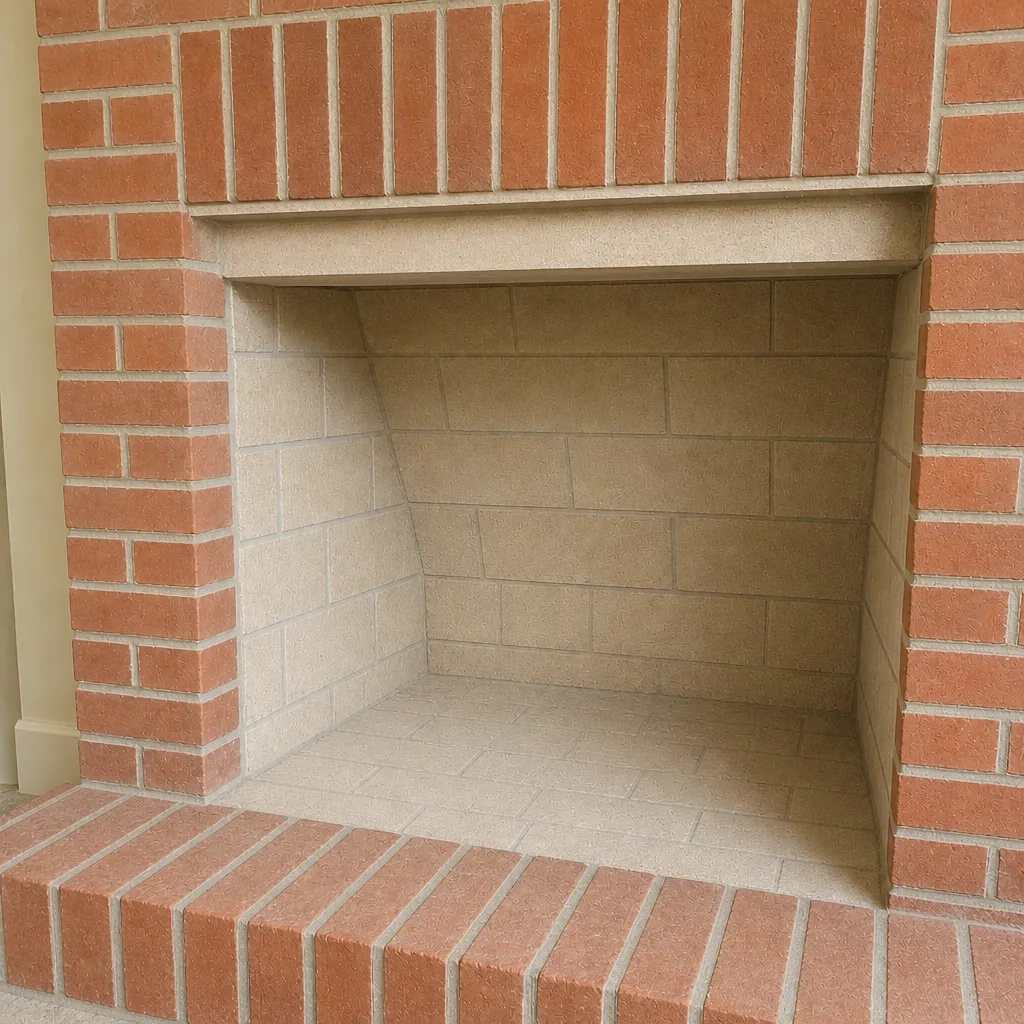
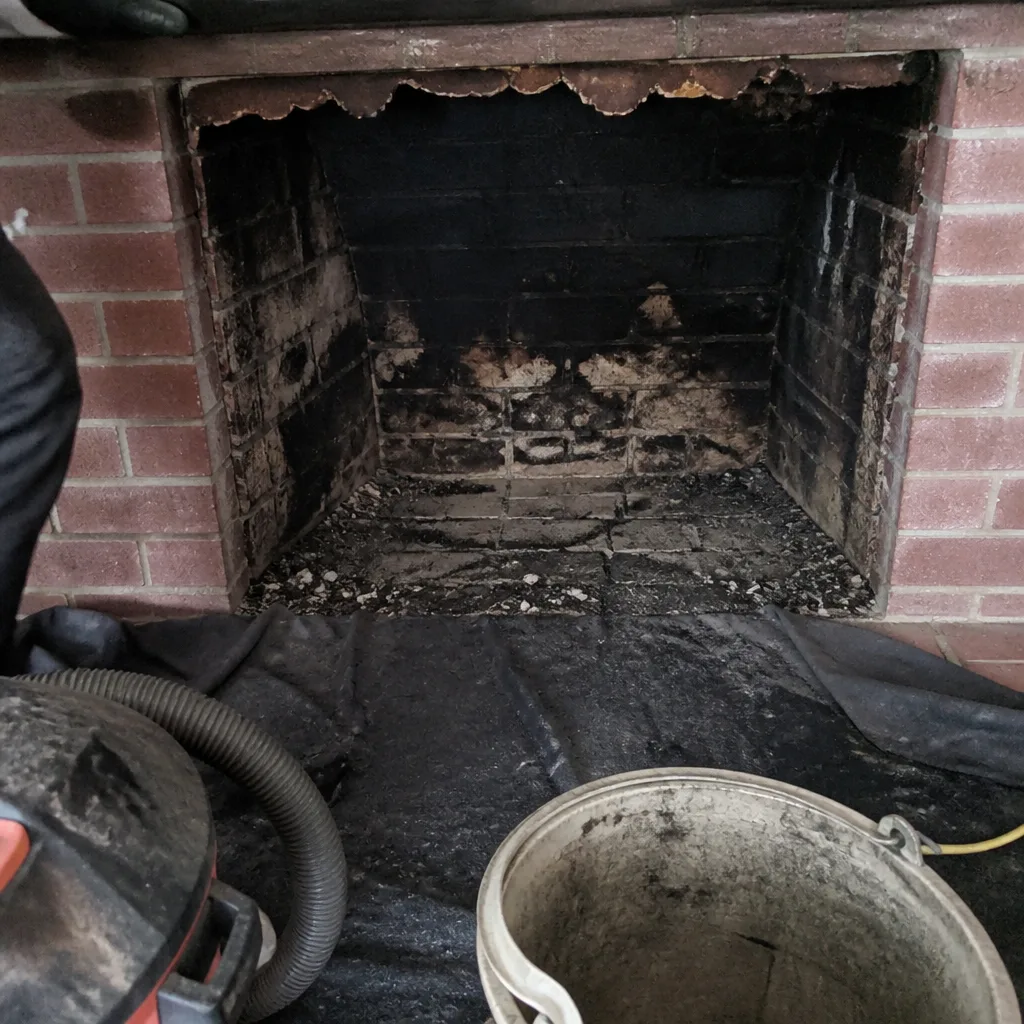
See the difference
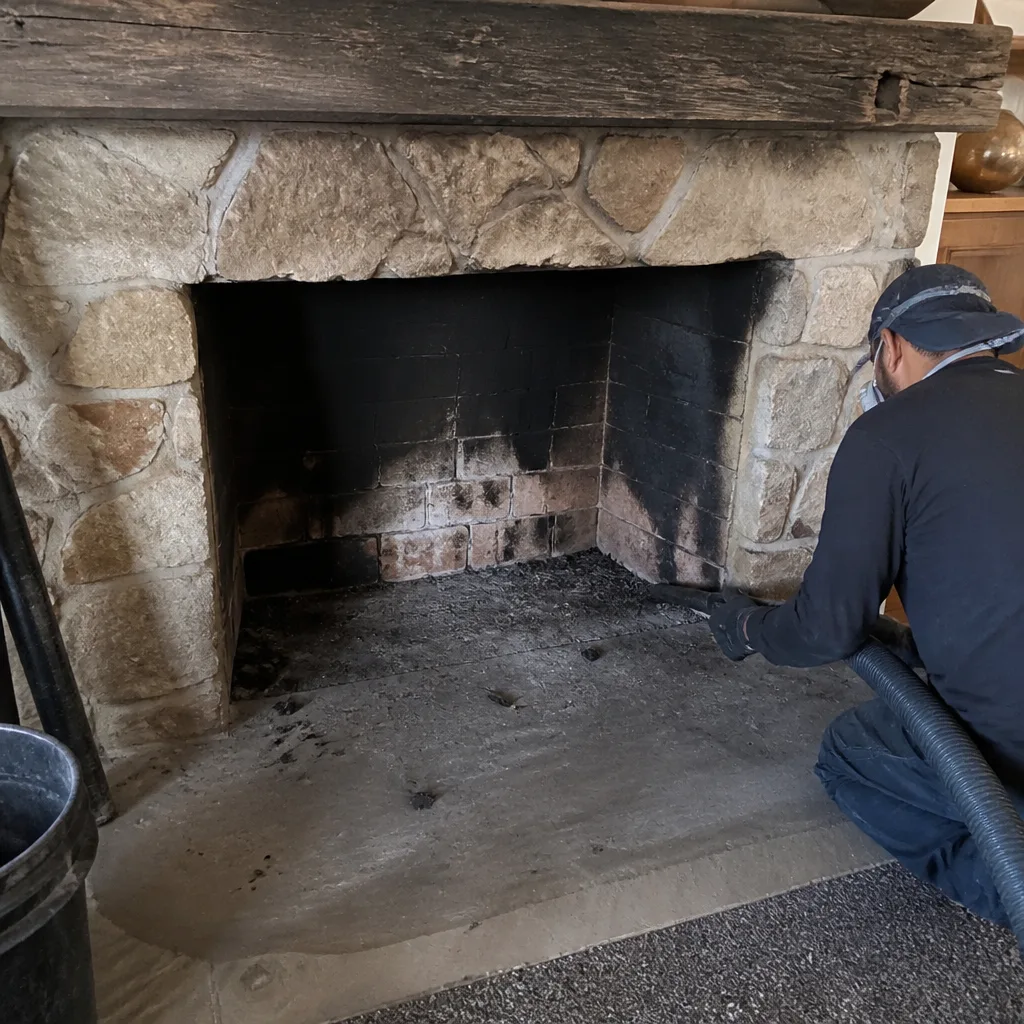 Before
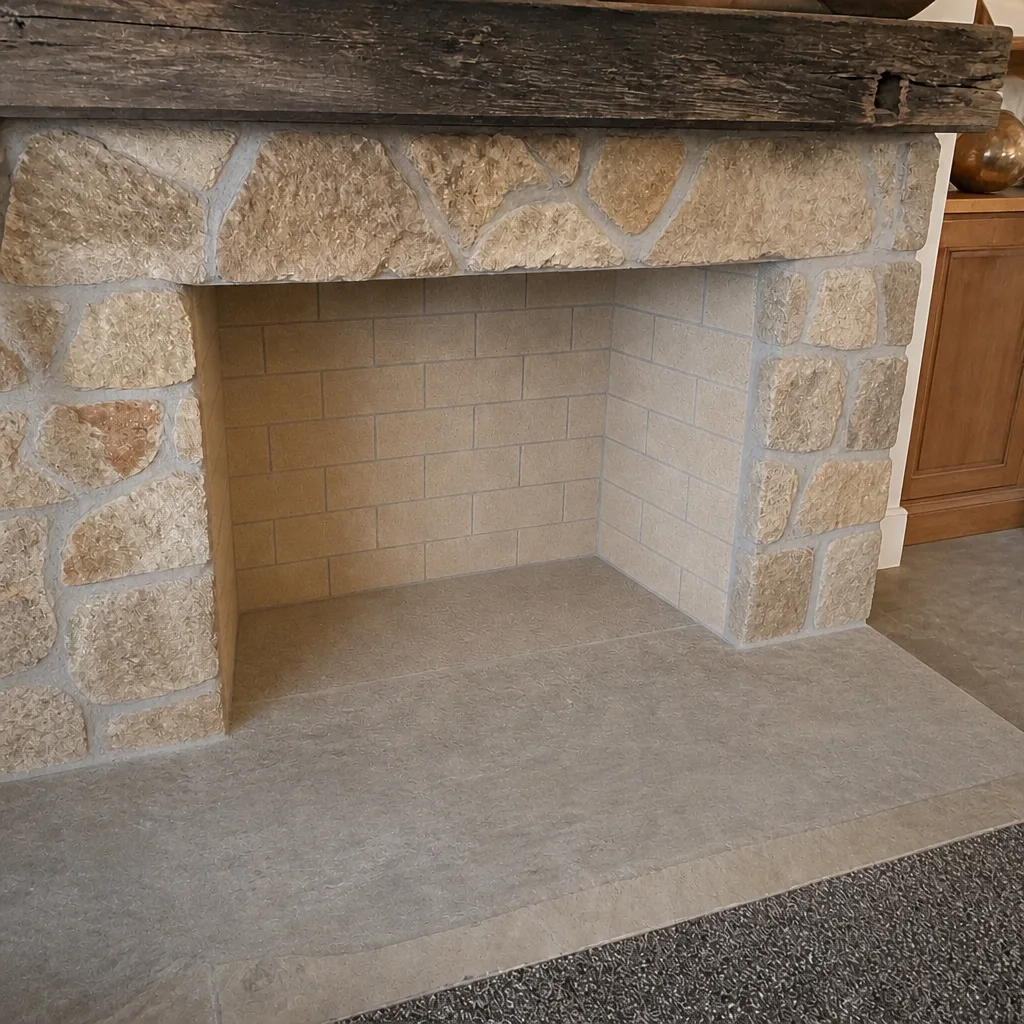 After
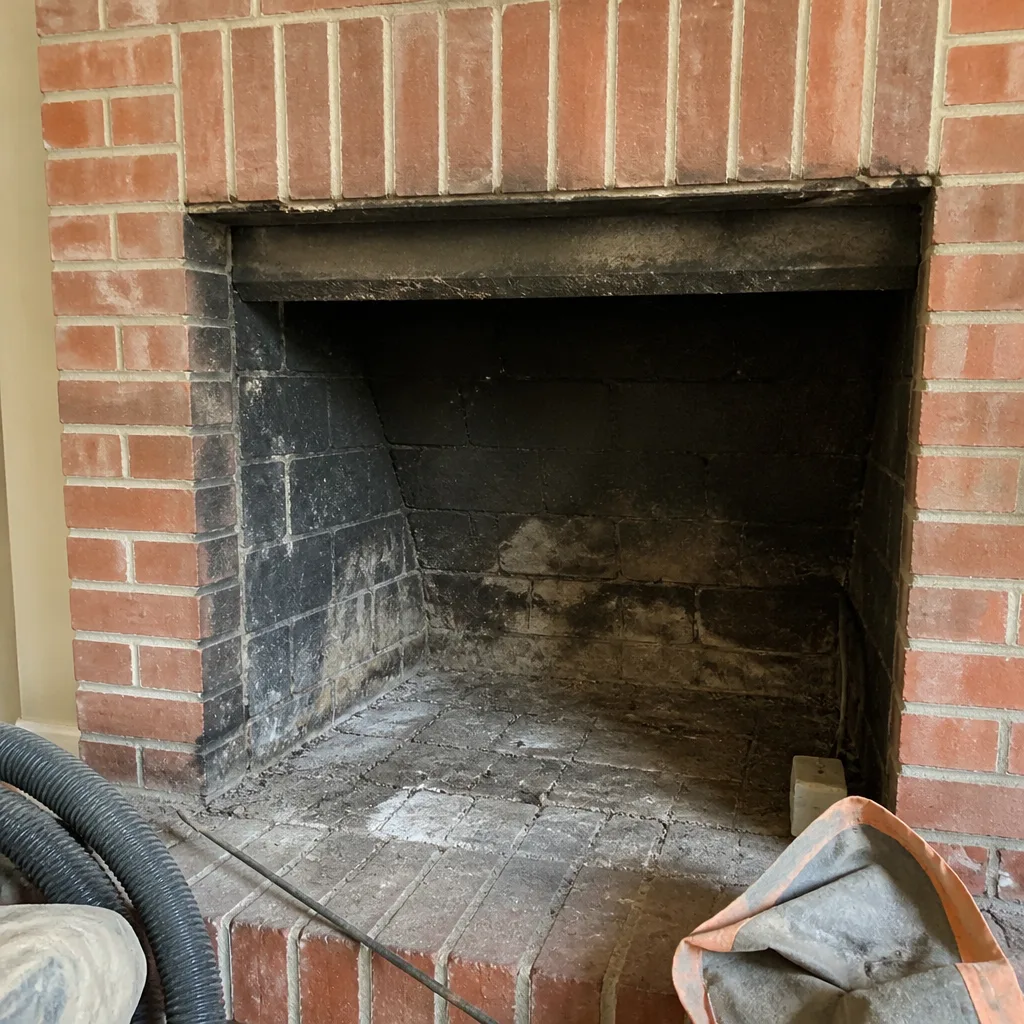 Before
 After
 Before
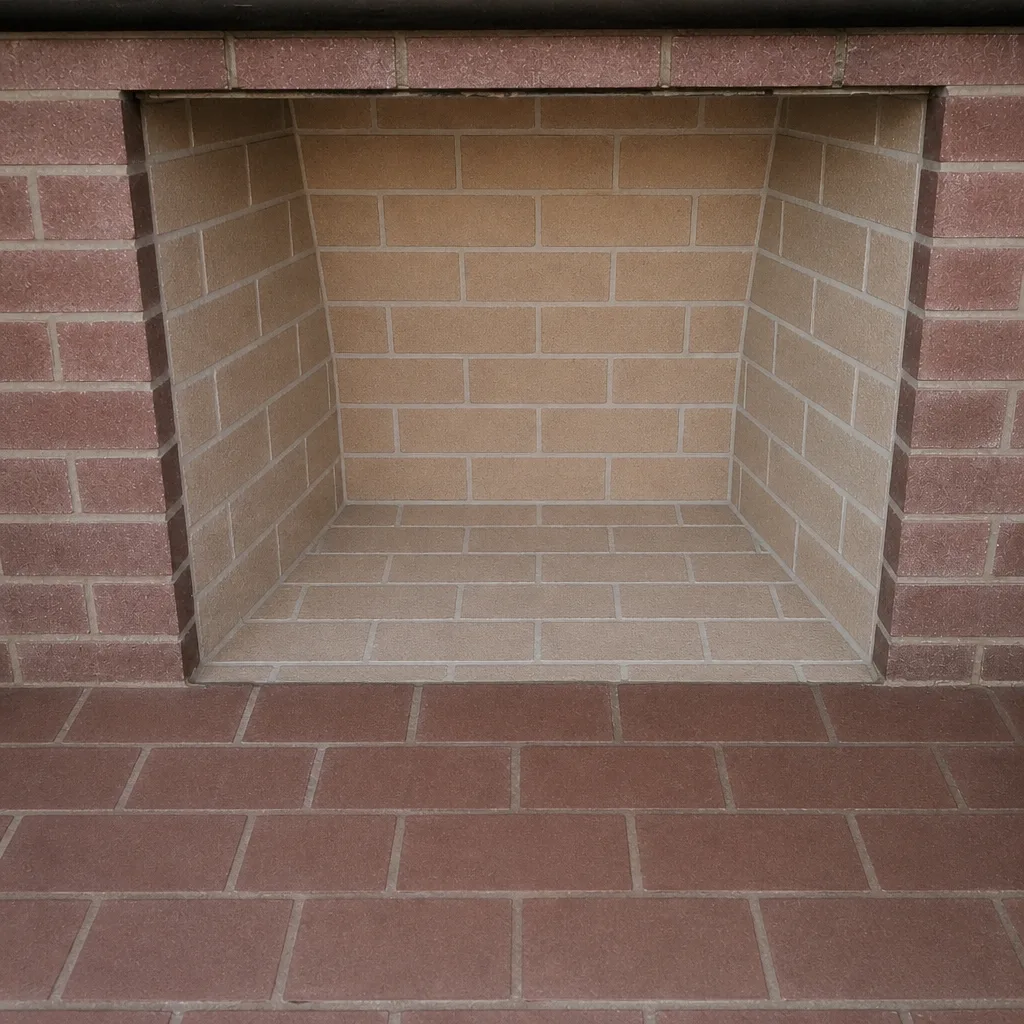 After
When to Call a Professional
Call us if any one of these is true: white efflorescence or spalled brick on the exterior; a damper that sticks, won’t seal, or won’t open fully; a smoky smell that shows up when the weather changes; a low rumble or bang during a fire; debris, tile fragments, or ash in the firebox; a prefab firebox panel that’s warped or discolored; or a year or more since the last inspection. Two or more of these together means stop using the fireplace. Book an inspection and a sweep together. A sweep is not a “maybe next month” item when the signs are present; it’s a before-the-next-fire item.
Call (833) 482-6444. We answer 24/7. Fast dispatch, 7am-7pm, Sunday through Friday. Chimney Sweep French Park offers free estimates.
Frequently Asked Questions
A creosote smell that appears when the weather changes is the most reliable no-tools indicator. It means a deposit is already in the flue and pressure changes are pulling air down past it. If the smell is persistent or you also see efflorescence, book a sweep before your next fire. Call (833) 482-6444 for a free estimate.
No, the stain itself isn’t dangerous, but what it signals is: water is moving through the masonry. Efflorescence usually traces back to a failing crown, cap, or flashing. Left alone, wet masonry damages the flue liner from the outside in. Call us to have the exterior checked.
Look at the interior of the firebox. Prefab units have metal or refractory panels, a metal firebox, and a metal chimney chase. Masonry fireplaces are brick lined with firebrick and a mortar joint. Prefab systems need their own specified parts, so it matters which one you have before anyone works on it.
For a fireplace used regularly through the burn season, an annual sweep and inspection is the standard recommendation. For a gas fireplace used occasionally, it’s still yearly. The reason is the inspection part, not the cleaning: you want someone looking at the flue, the cap, and the exterior once a year, because those are the components that fail quietly.
Get out of the house, call the fire department, and don’t reload the fireplace. That sound usually means a chimney fire or a creosote flare. Once the fire is out, the chimney needs a full inspection and cleaning before any further use. Never try to put it out or look into the flue yourself.
We work exclusively on chimneys, which is the only system we service. That means sweeping, inspection, fireplace repair, chimney repair, and cap and crown work, using professional-grade brands like DuraFlex, HeatShield, Copperfield, and Olympia Chimney. If a prefab fireplace near you needs a full reline, we do that too.
The Bottom Line
The warning signs that matter are the quiet ones: a white stain on the brick, a damper that doesn’t feel right, an odor that shows up with the weather, a noise during a fire that doesn’t belong. Those early indicators are how you catch a flue problem while it’s still a repair rather than a rebuild. The obvious signs – smoke in the room, black staining, a fire that won’t draw – are the late stage, and by then you’ve already lost a season. If you’re in French Park and any of the checklist items above flagged, book the inspection. The call is free, and a written estimate tells you exactly what’s next. Call (833) 482-6444. We answer 24/7. Fast dispatch, 7am-7pm, Sunday through Friday.
Written by the team at Chimney Sweep French Park.